
Arthroplasty Surgeon in Patna
Severe joint pain can affect walking, climbing stairs, sleeping, sitting, standing, and daily movement. When the knee, hip, or another joint becomes badly damaged, medicines and physiotherapy may give only temporary relief. In such cases, arthroplasty surgery may be considered.
Arthroplasty Surgery in Patna by Dr. Ramakant Kumar
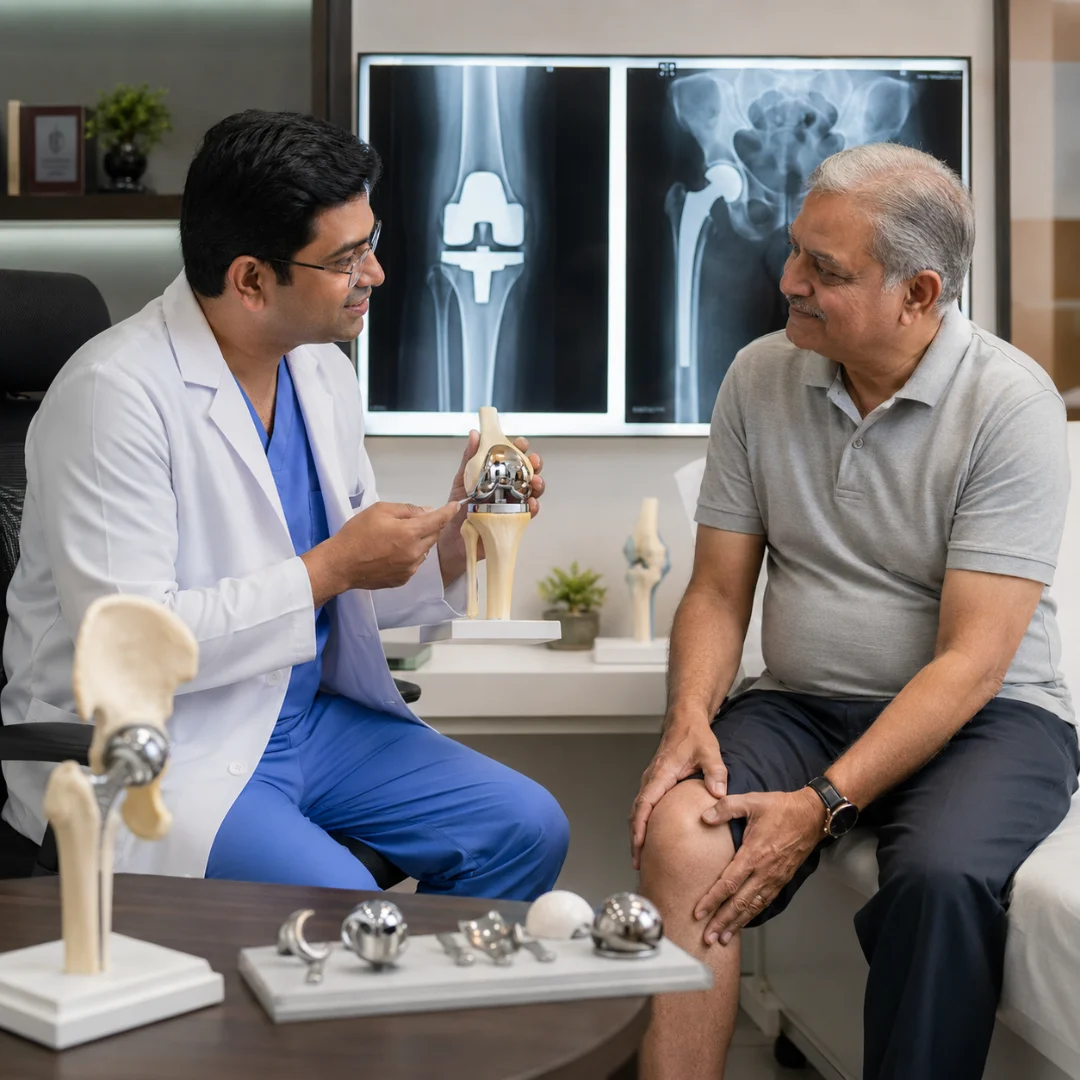
Arthroplasty refers to surgery done to replace a damaged joint. It is usually advised when the joint surface is severely worn out, movement is restricted, and daily life is affected despite non-surgical treatment.
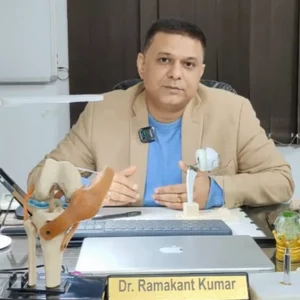
Dr. Ramakant Kumar is an orthopaedic surgeon in Patna with experience in knee arthroplasty, hip arthroplasty, robotic joint replacement, arthroscopy, sports injury treatment, and complex fracture care. He is MBBS, MS Orthopaedics from AIIMS New Delhi, DNB Orthopaedics, Gold Medalist, with fellowship training from Singapore and South Korea.
For patients searching for arthroplasty treatment in Patna, proper diagnosis is the first step. Every joint pain patient does not need surgery. The treatment plan depends on the joint involved, age, activity level, X-ray or MRI findings, medical condition, and previous treatment response.
Who May Need Arthroplasty Treatment?
Arthroplasty surgery may be considered when joint pain is severe and non-surgical options are no longer helping enough. Before advising surgery, the doctor may try medicines, physiotherapy, injections, exercise, weight control, lifestyle changes, and walking support.
You may need evaluation for arthroplasty if you have severe joint pain while walking, pain even at rest, night pain, stiffness, reduced movement, difficulty climbing stairs, trouble standing from a chair, bow-leg or knock-knee deformity, limping due to hip or knee pain, repeated swelling, or advanced arthritis seen on X-ray.
When these problems start limiting daily routine and mobility, a proper orthopaedic check-up can clarify whether surgery is required or conservative care is still possible.
Conditions Treated with Arthroplasty Surgery
Osteoarthritis
Osteoarthritis is one of the most common reasons for knee arthroplasty and hip arthroplasty. It occurs when the protective cartilage inside the joint wears down. Patients may feel pain, stiffness, swelling, reduced movement, and difficulty walking.
Rheumatoid Arthritis
Rheumatoid arthritis is an inflammatory disease that can damage the joint lining, cartilage, and bone. If the joint becomes severely damaged, arthroplasty may help reduce pain and improve function.
Avascular Necrosis
Avascular necrosis, or AVN, is commonly seen in the hip. It happens when blood supply to the femoral head is reduced. Early AVN may be treated with hip preservation, but advanced AVN with collapse may require hip arthroplasty.
Post-Traumatic Arthritis
Old fractures, dislocations, ligament injuries, or accident-related joint damage can later lead to arthritis. If pain and stiffness become severe, joint replacement may be considered.
Severe Joint Deformity
Long-standing arthritis can change joint alignment. Some patients develop bow legs, knock knees, or abnormal walking patterns. Arthroplasty may help correct alignment in suitable cases.
Types of Arthroplasty Surgery
The choice of arthroplasty is decided by the affected joint, patient age, bone strength, activity needs, deformity, and implant suitability.
Total Knee Arthroplasty
Total knee arthroplasty is performed when most parts of the knee joint are damaged. The worn-out joint surfaces are replaced with artificial components to improve movement and reduce pain.
Partial Knee Arthroplasty
Partial knee arthroplasty can be considered when damage is limited to one knee compartment and the remaining joint surfaces are in good condition. It is advised only for selected patients.
Total Hip Arthroplasty
Total hip arthroplasty is performed when both the ball and socket of the hip joint are damaged. It may be advised for advanced hip arthritis, AVN with collapse, or post-traumatic hip damage.
Revision Arthroplasty
Revision arthroplasty may be required if a previous joint implant loosens, wears down, gets infected, feels unstable, or starts causing pain. It is more complex than first-time joint replacement.
Partial Hip Arthroplasty
Partial hip arthroplasty is commonly used in selected hip fracture cases, especially in elderly patients. In this surgery, only the ball part of the hip is replaced.
Robotic-Assisted Arthroplasty Surgery
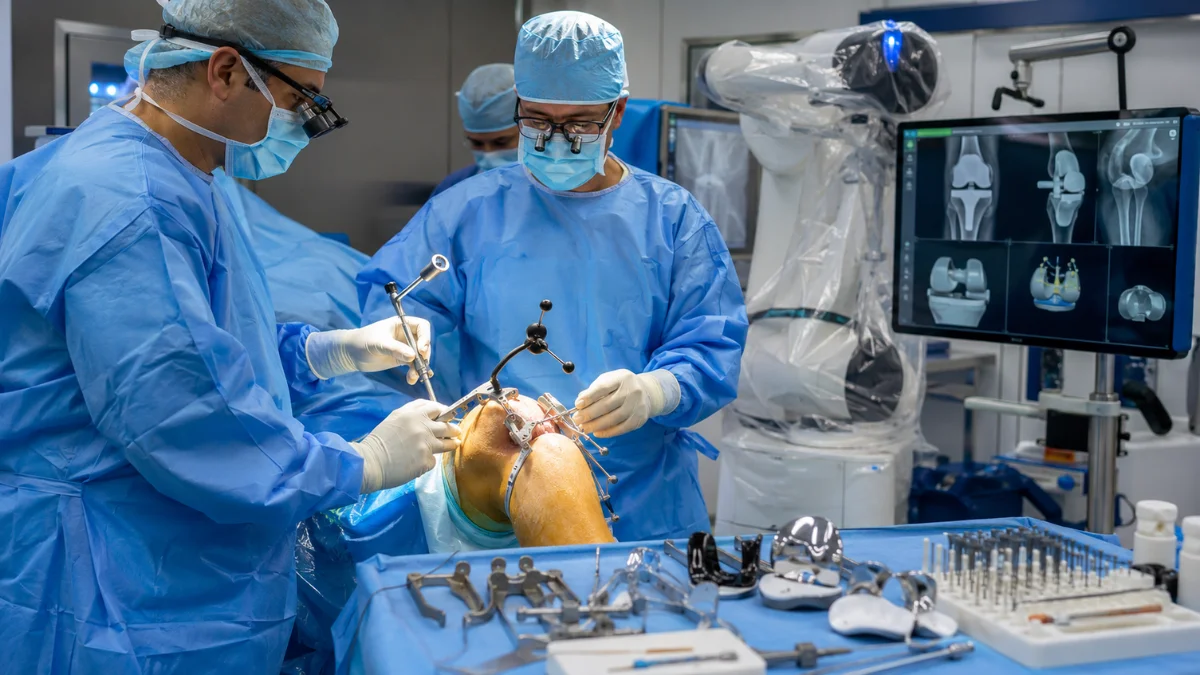
Robotic-assisted arthroplasty is an advanced technique used in selected joint replacement cases. It helps the surgeon plan the procedure more accurately and place the implant with better precision.
In robotic joint replacement, the surgeon remains in control while technology assists with planning, alignment, and bone preparation. It may be useful in selected knee replacement cases where accurate implant positioning and soft tissue balance are important.
Robotic surgery is not required for every patient. Suitability depends on joint condition, deformity, bone quality, and the surgeon’s assessment.
How Arthroplasty Treatment is Planned
Dr. Ramkant Kumar tailors the procedure to your age, lifestyle, and the degree of joint damage.
A joint replacement decision should not be based only on pain or X-ray findings. Some patients have severe pain but early joint damage, while others may have advanced X-ray changes but manageable symptoms.
Evaluation usually includes symptom discussion, walking assessment, previous treatment history, physical examination, X-ray, and sometimes MRI or CT scan. The doctor also checks medical fitness, especially in patients with diabetes, high blood pressure, heart disease, thyroid problems, kidney disease, asthma, obesity, or previous infection.
If the joint can still be managed without surgery, non-surgical treatment may be advised. If damage is advanced and daily life is badly affected, arthroplasty surgery may be discussed.
Arthroplasty Surgery Procedure
Arthroplasty surgery is usually performed under spinal, regional, or general anesthesia. The suitable option is selected after reviewing the patient’s health and the procedure required.
During surgery, the damaged joint surfaces are removed or prepared. Artificial components are placed to restore smoother movement. In knee arthroplasty, the damaged surfaces of the thigh bone and shin bone are replaced. In hip arthroplasty, the damaged ball and socket are replaced or partly replaced depending on the condition.
After implant placement, the surgeon checks movement, stability, alignment, and limb position. The wound is closed, dressing is applied, and the patient is shifted for monitoring.
Benefits of Arthroplasty Surgery
Arthroplasty can be helpful when joint damage is severe and conservative treatment is no longer effective.
Possible benefits include:
Reduced long-term joint pain.
Improved walking ability.
- Better joint movement.
- Less stiffness.
Improved stability and balance.
Correction of deformity in selected cases.
Reduced dependence on painkillers.
Better sleep and daily comfort.
The final outcome depends on joint condition, implant quality, surgical planning, medical fitness, physiotherapy, and long-term care.
Recovery After Arthroplasty Surgery
Recovery depends on the joint replaced, patient’s age, medical condition, muscle strength, implant type, and rehabilitation. Many patients are encouraged to start movement and walking with support soon after surgery, depending on doctor’s advice.
Most daily activities resume; driving is possible
Physiotherapy helps restore movement, improve strength, support balance, and build walking confidence. Patients should follow advice about exercises, wound care, walking support, medicines, and follow-up visits.
Arthroplasty Surgery Cost in Patna
The cost of arthroplasty surgery in Patna depends on the joint involved, implant type, hospital facility, room category, medical condition, surgery complexity, tests, anesthesia, medicines, and hospital stay.
Approximate cost may vary:
Partial Knee Arthroplasty
₹1.8 lakh to ₹3.5 lakh approx.
Total Knee Arthroplasty
₹2.5 lakh to ₹5.5 lakh approx.
Total Hip Arthroplasty
₹2.5 lakh to ₹5.5 lakh approx.
Robotic Knee Arthroplasty
₹3.5 lakh to ₹6.5 lakh approx.
Partial Hip Arthroplasty
₹1.8 lakh to ₹3.5 lakh approx.
Revision Arthroplasty
₹4 lakh to ₹8 lakh+ approx.

These are estimated ranges only. Final cost is decided after examination, report review, implant selection, and medical fitness.
Tests Needed Before Arthroplasty Surgery
Before arthroplasty surgery, tests are advised to confirm diagnosis and check surgical fitness. Common tests may include X-ray, MRI or CT scan if needed, blood tests, blood sugar, kidney function test, liver function test, urine test, ECG, chest X-ray, infection screening, anesthesia evaluation, and physician or cardiac clearance in selected patients.
These investigations help reduce surgical risk and allow better planning.
Risks of Arthroplasty Surgery
Like any major surgery, arthroplasty has possible risks. These may include infection, blood clots, stiffness, bleeding, wound healing problems, nerve or blood vessel injury, implant loosening, dislocation in hip replacement, persistent pain, or need for revision surgery.
Risks can be reduced with proper evaluation, infection control, safe surgical technique, early movement, physiotherapy, and regular follow-up.
Why Choose Dr. Ramakant Kumar for Arthroplasty Surgery in Patna?
A good joint replacement outcome depends on clear diagnosis, the right implant choice, careful surgical planning, and proper recovery guidance.
Key points include:
MS Orthopaedics from AIIMS New Delhi
DNB Orthopaedics and Gold Medalist.
Fellowship training from Singapore and South Korea
12+ years of orthopaedic experience.
Experience in knee arthroplasty, hip arthroplasty, robotic joint replacement, arthroscopy, and fracture care.
For patients searching for arthroplasty surgery in Patna, Dr. Ramakant Kumar provides structured orthopaedic care focused on pain relief, safe recovery, improved movement, and long-term joint function.
FAQs About Arthroplasty Surgery in Patna
Have questions about your orthopedic care? You’re not alone. Here are answers to some of the most commonly asked questions about hip replacement surgery and what to expect from the treatment.
What is arthroplasty surgery?
Arthroplasty is a joint replacement surgery in which damaged joint surfaces are replaced or resurfaced with artificial components to reduce pain and improve movement.
Is arthroplasty the same as joint replacement?
Yes. Arthroplasty is the medical term for joint replacement surgery. Knee replacement is knee arthroplasty, and hip replacement is hip arthroplasty.
Which joints can be treated with arthroplasty?
Arthroplasty is commonly performed for the knee and hip. It may also be done for shoulder, elbow, ankle, and other joints in selected cases.
Is arthroplasty a major surgery?
Yes, arthroplasty is a major surgery. It requires proper evaluation, anesthesia, surgical planning, rehabilitation, and follow-up.
Can I walk after arthroplasty surgery?
Many patients start walking with support soon after surgery, depending on the joint replaced, patient health, and doctor’s advice.
What is robotic arthroplasty?
Robotic arthroplasty is robot-assisted joint replacement surgery. It helps with planning and accurate implant placement in selected cases.
What is the cost of arthroplasty surgery in Patna?
The cost depends on the joint, implant type, hospital facility, surgery complexity, and patient health. Knee or hip arthroplasty may commonly range from ₹2.5 lakh to ₹5.5 lakh, while robotic or revision surgery may cost more.
What tests are needed before arthroplasty?
Tests may include X-ray, MRI or CT if needed, blood tests, urine test, ECG, chest X-ray, sugar test, kidney and liver function tests, infection screening, anesthesia fitness, and cardiac clearance in selected cases.
What are the risks of arthroplasty surgery?
Possible risks include infection, blood clots, stiffness, bleeding, wound problems, implant loosening, dislocation, persistent pain, or need for revision surgery.
When should I consult Dr. Ramakant Kumar?
You should consult him if joint pain affects walking, stairs, sleep, daily work, or independence, or if you have been advised knee arthroplasty, hip arthroplasty, robotic joint replacement, or revision surgery.