
Best Knee Replacement Surgeon in Patna, Bihar, India
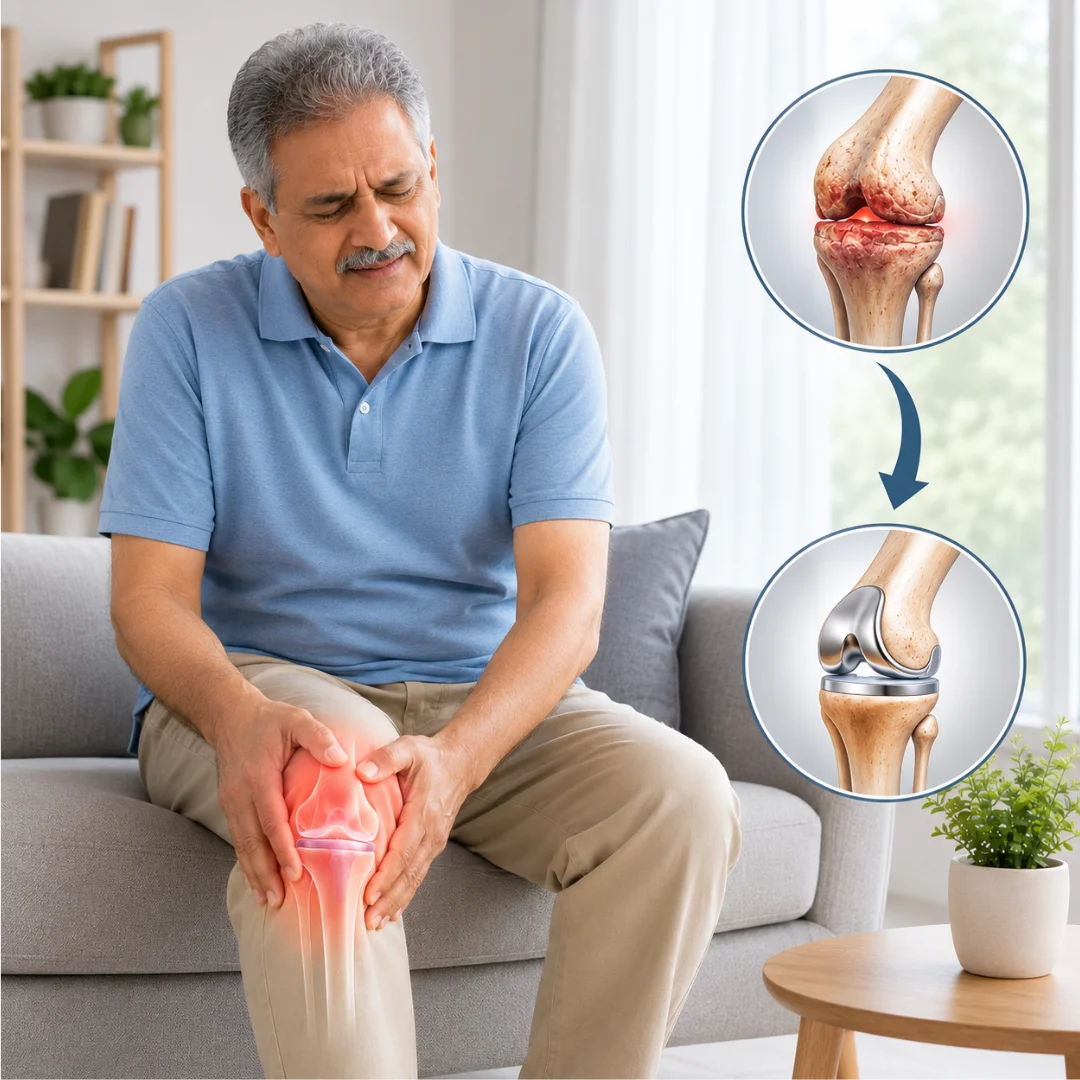
Severe knee pain can slowly take away your comfort, confidence, and independence. For many people, the problem starts with mild pain while walking or climbing stairs, but over time it may become difficult to stand from a chair, walk even short distances, sleep properly, or continue daily work without pain.
Knee Replacement Surgery in Patna by Dr. Ramakant Kumar
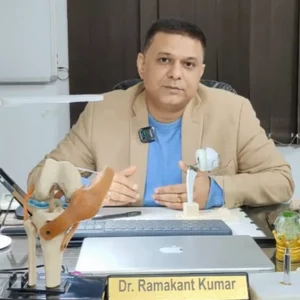
If you are facing long-term knee pain, stiffness, swelling, or difficulty in walking, Dr. Ramakant Kumar, a trusted orthopaedic surgeon in Patna, can help you understand the real cause of your knee problem and guide you toward the right treatment.
Dr. Ramakant Kumar is an experienced orthopaedic and joint replacement surgeon in Patna, known for knee replacement, robotic knee replacement, hip replacement, arthroscopy, ACL surgery, sports injury treatment, and complex fracture care. He is MBBS, MS Orthopaedics from AIIMS New Delhi, DNB Orthopaedics, Gold Medalist, with advanced fellowship training from National University Hospital, Singapore and South Korea.
At Advanced Bone & Joint Clinic, Patna, every patient is assessed carefully so the treatment plan matches their pain level, knee damage, lifestyle, and recovery needs. Every knee pain patient does not need surgery. Dr. Ramakant Kumar first evaluates the condition properly and then explains whether the pain can be managed with medicines, physiotherapy, injections, lifestyle changes, or whether knee replacement surgery may be the better option.
For patients searching for the Best Orthopedic Doctor in Patna, the focus should be on proper diagnosis, clear explanation, and treatment that suits the patient’s actual condition. The aim is to reduce pain, improve movement, restore confidence, and help patients return to a more comfortable daily life.
Knee Problems That Can Progress to Joint Replacement
Osteoarthritis of the Knee
The most common reason for knee replacement in Patna and across India. Osteoarthritis gradually wears away the protective cartilage inside the knee joint, causing the bones to rub against each other.Many patients feel a dull pain inside the knee, stiffness after waking up, visible swelling, and gradually increasing trouble while walking. When the cartilage loss becomes severe and the joint space is critically reduced on X-ray, knee replacement restores the lost surface and relieves the pain.
Rheumatoid Arthritis
An autoimmune condition that attacks the joint lining, damaging cartilage and bone even in younger patients. Rheumatoid arthritis may involve both knees at the same time and can damage the joint faster if inflammation is not controlled properly. Patients with severe rheumatoid damage of the knee joint may be candidates for replacement surgery even before reaching old age.
Post-Traumatic Knee Arthritis
A history of knee fracture, ligament injury, or meniscus damage can alter joint mechanics permanently. Even years after an injury appears “healed,” the joint surface may deteriorate unevenly, leading to pain, instability, and arthritis. Post-traumatic arthritis is a significant cause of knee replacement in younger and middle-aged patients.
Severe Bow-Leg or Knock-Knee Deformity
Long-standing arthritis can gradually change the alignment of the leg, creating visible deformity. This abnormal alignment shifts body weight to one side of the knee, accelerating further damage. Knee replacement surgery, when correctly planned, corrects the alignment and evenly distributes body weight across the new joint surface.
Failed Previous Knee Surgery (Revision Knee Replacement)
When a knee implant placed years earlier begins to loosen, become infected, wear out, or cause persistent pain, revision knee replacement may be necessary. This is a significantly more complex procedure requiring specialised implants, careful bone management, and the experience to handle unpredictable intraoperative findings. Dr. Ramakant Kumar evaluates and manages revision knee replacement cases for patients across Bihar.
Types of Knee Replacement Surgery Performed by Dr. Ramakant Kumar
Dr. Ramakant Kumar tailors the procedure to your age, lifestyle, and the degree of joint damage.
Total Knee Replacement (TKR)
The most commonly performed knee replacement procedure. Recommended when arthritis has damaged the majority of the knee joint. The worn surfaces of the thigh bone (femur) and shin bone (tibia) are replaced with precisely shaped metal components. A high-grade medical plastic insert is placed between them to allow smooth, low-friction movement. In selected cases, the back surface of the kneecap is also resurfaced. Total knee replacement reliably reduces severe pain, restores walking ability, and corrects deformity.
Partial (Unicompartmental) Knee Replacement
When arthritis is confined to only one compartment of the knee — most often the inner (medial) side — and the rest of the joint remains healthy, partial knee replacement may be an option. It preserves more natural bone and ligament tissue, allows a smaller incision, and may offer a more natural-feeling knee after recovery. However, careful patient selection is essential. Not every patient with medial arthritis is a good candidate, and Dr. Ramakant Kumar assesses eligibility thoroughly before recommending this procedure.
Robotic-Assisted Knee Replacement
Robotic-assisted surgery is an advanced technique that uses real-time bone mapping and computer guidance to assist the surgeon in achieving more precise implant placement, better alignment, and improved soft tissue balance. The robot does not perform the surgery — the surgeon does. The robotic system acts as an intelligent guide that improves precision beyond what hand instruments alone can achieve.
For patients with complex deformity, unusual bone anatomy, or high expectations for functional outcomes, robotic-assisted knee replacement may provide measurable advantages in alignment accuracy.Dr. Ramakant Kumar offers robotic knee replacement in Patna, using advanced technology to support more precise planning, better implant alignment, and patient-specific surgical care.
Revision Knee Replacement
Addressing a failed or problematic knee implant requires a different level of surgical expertise, planning, and implant inventory than primary replacement. Dr. Ramakant Kumar evaluates each revision case individually, considering implant type, extent of bone loss, reason for failure, and patient health before planning the revision procedure.
How Dr. Ramakant Kumar Decides Whether You Need Knee Replacement
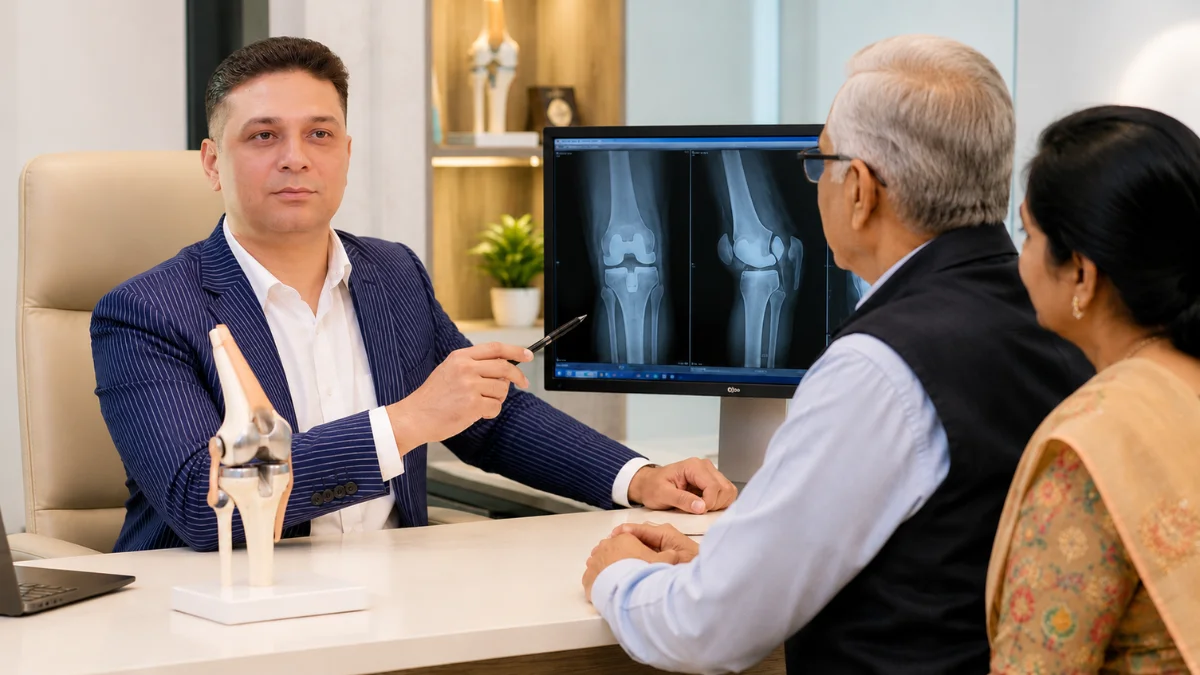
A knee replacement decision should be based on proper diagnosis, not just pain alone. Some patients have severe pain but early joint damage. In some cases, the X-ray may show major joint damage, but the patient may still be able to manage daily activities with limited discomfort.That is why clinical examination and patient history are very important.
Dr. Ramakant Kumar follows a careful evaluation process before advising knee replacement surgery. The aim is to understand whether surgery is truly needed and whether the patient is medically fit for the procedure.
The evaluation may include:
- Detailed discussion about pain, walking ability, daily difficulty, and previous treatment.
- Physical examination of knee movement, swelling, deformity, and stability.
- Checking whether pain is coming from the knee, hip, spine, muscles, or nerves.
- X-ray to assess joint space, cartilage loss, bone damage, and deformity.
- Review of previous medicines, injections, physiotherapy, or surgery.
- Assessment of age, diabetes, blood pressure, heart condition, weight, and overall fitness.
- Understanding the patient’s expectations and lifestyle needs.
If the arthritis is mild or moderate, Dr. Ramakant Kumar may advise non-surgical treatment first. This may include medicines, physiotherapy, weight control, muscle strengthening, walking support, activity modification, or injections.
If the knee damage is advanced and pain is affecting daily life despite proper non-surgical treatment, knee replacement surgery may be discussed.
This careful evaluation helps patients choose treatment with more clarity and reduces the chance of planning surgery before it is truly needed
Related: Best Knee Replacement Surgeon in Patna, Bihar, India
Knee Replacement Surgery Procedure at Our Clinic in Patna
Knee replacement surgery is usually done under spinal anesthesia or general anesthesia. The type of anesthesia is decided after medical evaluation and discussion with the anesthesia team.
During surgery, the surgeon makes an incision over the knee to access the joint. The damaged cartilage and bone surfaces are carefully removed. The thigh bone and shin bone are prepared so that the artificial implant fits properly. The implant components are then fixed in place, commonly using bone cement.
- A durable medical spacer is fitted between the implant surfaces so the new knee can bend and glide more smoothly during movement. This allows smooth movement between the thigh bone and shin bone. The surgeon checks the knee alignment, stability, bending, and movement before closing the incision.
The wound is closed carefully and dressing is applied. After surgery, the patient is shifted to the recovery area and monitored by the medical team.
Modern knee replacement focuses on accurate implant placement, proper alignment, pain control, early movement, and safe recovery. In robotic knee replacement, technology helps with planning and precision during the procedure.
Benefits of Knee Replacement Surgery
For patients with severe arthritis and long-term knee pain, knee replacement surgery can bring major improvement in daily life. The main goal is to reduce pain and help the patient walk more comfortably.
Possible benefits of knee replacement surgery include:
- Relief from severe knee pain.
- Improved walking ability.
- Better knee alignment.
- Reduced stiffness.
- Improved balance and stability.
- Better ability to climb stairs.
- Reduced dependence on painkillers.
- Better sleep due to less night pain.
- Improved ability to perform daily activities.
- More confidence while walking.
- Improved quality of life.
The results of knee replacement depend on several factors, including the patient’s knee condition, implant selection, surgical technique, medical fitness, physiotherapy, and post-surgery care.
Patients should also understand that knee replacement is not just an operation. It is a complete recovery process that includes preparation, surgery, rehabilitation, follow-up, and long-term care.Patients should also understand that knee replacement is not just an operation. It is a complete recovery process that includes preparation, surgery, rehabilitation, follow-up, and long-term care.
Recovery After Knee Replacement — Realistic Timeline
In Hospital (Days 1–4 typically)
Most patients begin physiotherapy-assisted movement and supported walking within 24 hours of surgery. The focus is on pain control, swelling management, safe knee bending, and prevention of blood clots. The physiotherapy team begins teaching exercises for strength and range of motion.
Weeks 6–12
Many patients transition from a walker to a walking stick and then to independent walking. Stair climbing, longer walks, and light outdoor activity become achievable. Continued physiotherapy is essential during this phase.
Long-Term
Modern knee implants are designed to last many years — often 15–20 years or more — when used appropriately. Long-term success depends on maintaining a healthy weight, avoiding high-impact activity, continuing strengthening exercises, and attending follow-up appointments.
First 6 Weeks at Home
Swelling, warmth, and mild pain are normal and expected. Walking with a walker or crutches, ice application, leg elevation, and prescribed exercises are the daily priorities. Most patients can manage basic household movement and self-care independently within 2–3 weeks.
Recovery after knee replacement is a gradual, structured process. Understanding what to expect at each stage removes anxiety and helps patients stay committed to rehabilitation.
Month 3–6
Most patients report significant improvement in pain, mobility, and confidence. Return to light office work, social activity, and travel is typically possible for suitable patients during this period.
Following Dr. Ramakant Kumar’s post-operative protocol closely is the single biggest factor in how fast you recover.
Life After Knee Replacement — What You Can and Cannot Do
Most patients can return to
- Walking for exercise and daily errands
- Climbing stairs with confidence
- Driving (once cleared by the surgeon)
- Light household work
- Office work and social gatherings
- Swimming and stationary cycling (excellent low-impact options)
- Attending religious and family events that were previously too painful to manage
Activities to approach with caution or avoid:
Running on hard surfaces
- High-impact sports like football or badminton (unless specifically cleared)
- Deep squatting beyond comfortable range without guidance
- Sudden pivoting or twisting movements
- Carrying very heavy loads regularly
- impact options)
Dr. Ramakant Kumar provides individualised activity guidance after surgery, based on the patient’s age, fitness, and implant type. He does not give one-size-fits-all instructions.
Knee Replacement Surgery Cost in Patna — Dr. Ramakant Kumar
The cost of knee replacement surgery in Patna generally ranges between ₹1,75,000 and ₹6,90,000, depending on the type of procedure and the patient’s specific condition. Standard total knee replacement typically costs between ₹2,50,000 and ₹5,00,000, while robotic-assisted knee replacement ranges from ₹3,50,000 to ₹6,50,000.
Key Factors That Influence the Cost
Type of Surgery — Total, partial, robotic-assisted, or revision knee replacement each carry different costs.
- Unilateral vs. Bilateral — Replacing both knees in one procedure costs more than a single knee surgery.
- Implant Quality — Standard domestic implants cost less than premium imported implants. Dr. Ramakant Kumar guides patients toward the right implant based on age, weight, and lifestyle — not just price.
- Patient’s Medical Condition — Pre-existing conditions like diabetes or heart disease may require additional investigations and specialist clearances.
- Hospital Room Category — General, semi-private, and private ward options are available at different price points.
Why Patients from Patna and Across Bihar Choose Dr. Ramakant Kumar
AIIMS-Trained With International Fellowship — In Patna
Patients from Bihar previously had to travel to Delhi, Mumbai, or Chennai for this level of orthopaedic expertise. Dr. Ramakant Kumar brings AIIMS-level training combined with Singapore and South Korean fellowship experience directly to Patna. Advanced orthopaedic care is no longer out of reach for patients across Bihar.
He Will Tell You If You Don’t Need Surgery
In a healthcare environment where surgical recommendations sometimes come too quickly, Dr. Ramakant Kumar is known for telling patients honestly when non-surgical treatment is still appropriate. Patients trust this. They know that when he does recommend surgery, the recommendation is based on evidence — not convenience.
Robotic Knee Replacement Available in Patna
Robotic-assisted knee replacement is available at very few centres in Bihar. Advanced Bone & Joint Clinic is one of them. Patients who previously had to travel out of state for robotic surgery can now access this technology close to home.
Expertise Across the Full Spectrum of Orthopaedic Care
Knee replacement is one part of what Dr. Ramakant Kumar offers. His practice also covers:
- Hip Replacement (total and partial)
- Arthroscopy (keyhole surgery for knee and shoulder)
- ACL Reconstruction (ligament surgery)
- evision Joint ReplaSports Injury Treatment
- Complex Fracture Management
- Rcement
This breadth means that if your knee problem turns out to be related to a hip, ligament, or muscle issue, Dr. Ramakant Kumar has the expertise to diagnose and treat it accurately — rather than referring you elsewhere.
Personalised Treatment Planning
No two patients have identical knees, arthritis patterns, lifestyles, or medical histories. Dr. Ramakant Kumar tailors his treatment plan to each patient’s specific age, activity level, bone quality, deformity, and long-term goals.
FAQs About Knee Replacement Surgery in Patna
Have questions about your orthopedic care? You’re not alone. Here are answers to some of the most commonly asked questions about hip replacement surgery and what to expect from the treatment.
What is knee replacement surgery?
Knee replacement surgery is a procedure where the damaged surfaces of the knee joint are replaced with artificial implants. It is usually advised for advanced arthritis when pain, stiffness, and walking difficulty are not improving with non-surgical treatment.
Who is the right doctor for knee replacement in Patna?
An experienced orthopaedic surgeon with expertise in joint replacement, knee arthritis, implant selection, alignment correction, and post-surgery recovery is the right doctor for knee replacement. Dr. Ramakant Kumar is an orthopaedic surgeon in Patna with advanced training and experience in knee replacement and robotic knee replacement surgery.
Is knee replacement always required for arthritis?
No. Knee replacement is usually advised only when arthritis is advanced and non-surgical treatments are no longer giving enough relief. Early-stage arthritis may be managed with medicines, physiotherapy, exercises, weight control, injections, and lifestyle changes.
How do I know if my knee pain is serious?
Knee pain may be serious if it continues for months, increases while walking, causes swelling, affects sleep, limits daily activity, or causes deformity. If you are unable to walk comfortably or painkillers are becoming a regular need, you should consult an orthopaedic doctor.
Is robotic knee replacement better?
Robotic knee replacement can help with more precise planning, alignment, and implant placement in suitable patients. However, every patient does not need robotic surgery. The best approach depends on the patient’s knee condition, deformity, bone quality, and surgeon’s advice..
How long does a knee replacement implant last?
Modern knee replacement implants can last many years when placed properly and cared for well. Implant life depends on implant quality, patient weight, activity level, bone condition, surgical technique, and long-term precautions
Can both knees be replaced together?
In some patients, both knees can be replaced in one sitting. In others, it may be safer to replace one knee first and the other later. The decision depends on age, heart health, diabetes, blood pressure, fitness level, and overall medical condition
What are the risks of knee replacement surgery?
Like any major surgery, knee replacement may have risks such as infection, blood clots, stiffness, swelling, implant loosening, or delayed wound healing. These risks can be reduced with proper pre-surgery evaluation, safe surgical technique, infection control, early movement, and regular follow-up.
How painful is knee replacement surgery?
Pain is expected after surgery, but it is managed with modern pain-control methods, medicines, nerve blocks, icing, and physiotherapy. The aim is to keep pain controlled enough so the patient can start safe movement and exercises.
When can I walk after knee replacement?
Many patients start walking with support soon after surgery, depending on their condition and doctor’s advice. Walking improves gradually with physiotherapy, muscle strengthening, and confidence.
Is physiotherapy necessary after knee replacement?
Yes. Physiotherapy is very important after knee replacement. It helps improve knee bending, muscle strength, walking balance, and overall recovery. Skipping exercises may lead to stiffness and slower recovery.
Can I climb stairs after knee replacement?
Yes, many patients can climb stairs after recovery and proper physiotherapy. Initially, stair climbing is done under guidance and with support. Over time, strength and confidence improve.
What should I avoid after knee replacement?What should I avoid after knee replacement?
Patients should avoid high-impact activities, sudden twisting, jumping, running on hard surfaces, sitting in unsafe positions, and ignoring physiotherapy advice. Long-term precautions help protect the implant.
What is the cost of knee replacement surgery in Patna?
The cost depends on implant type, hospital facility, surgical technique, one knee or both knees, patient health, and recovery needs. For the correct estimate, it is best to consult Dr. Ramakant Kumar with your reports and X-rays.
Can knee replacement correct bow legs?
Yes, knee replacement can often help correct bow-leg or knock-knee deformity caused by advanced arthritis. Proper alignment correction is an important part of successful knee replacement surgery.
Is knee replacement safe for elderly patients?
Knee replacement can be safe for elderly patients if they are properly evaluated before surgery. Diabetes, blood pressure, heart health, kidney function, and overall fitness are checked before planning surgery.Knee replacement can be safe for elderly patients if they are properly evaluated before surgery. Diabetes, blood pressure, heart health, kidney function, and overall fitness are checked before planning surgery.
When should I book an appointment with Dr. Ramakant Kumar?
You should book an appointment if knee pain is affecting walking, stairs, sleep, daily work, or independence. You can also consult him if another doctor has advised knee replacement and you want proper guidance before making a decision.You should book an appointment if knee pain is affecting walking, stairs, sleep, daily work, or independence. You can also consult him if another doctor has advised knee replacement and you want proper guidance before making a decision.
What Tests/Investigations Are Needed Before Knee Replacement Surgery?
Before knee replacement surgery, the doctor usually advises a few tests to check the patient’s overall health and surgical fitness. These may include blood tests, urine test, X-ray of the knee, chest X-ray, ECG, blood sugar test, kidney function test, liver function test, and infection screening when required. Some patients may also need cardiac clearance, physician fitness, or anesthesia evaluation, especially if they have diabetes, blood pressure, heart disease, asthma, thyroid problems, or other medical conditions. These investigations help make the surgery safer and allow the team to plan proper anesthesia, medicines, and recovery care.
Book Your Consultation
You do not have to live with hip pain. A single consultation can tell you exactly what is causing your pain, whether surgery is truly needed, and what to expect.
Advanced Bone & Joint Clinic East Boring Canal Road, Near Panchmukhi Hanuman Mandir, Sri Krishna Nagar, Kidwaipuri, Patna, Bihar – 800001
Consultations available in Hindi and English. Patients from across Bihar and neighbouring states are welcome.