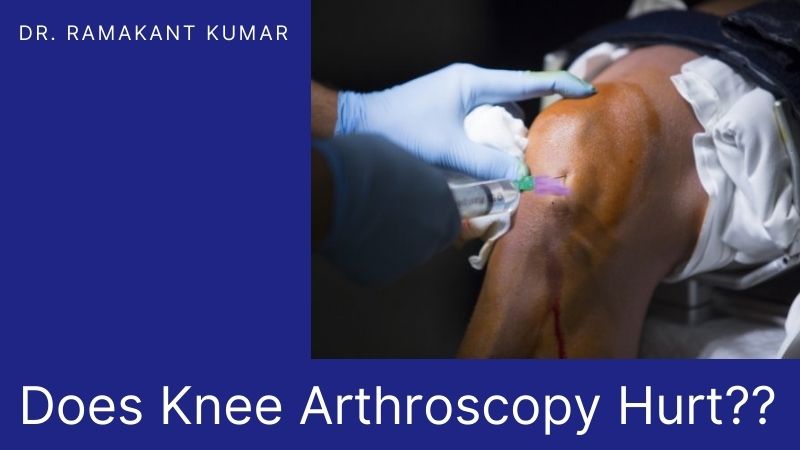
Are you looking for an answer to the question, “Does knee arthroscopy hurt?” Take a look at this blog… because it contains a proper response to this question… The knee is a highly complex structural component of the body that requires a great deal of attention. However, because there are so many moving parts in the area, it is extremely vulnerable to injury.
Arthroscopy is a type of surgery that allows doctors to look inside a joint and diagnose and treat problems. If you have aggravation or inflammation in a joint, or if you have harmed a joint, your primary care physician may recommend it.
There may be times when you experience sudden knee pain and are unable to control the pain. In such cases, you should seek help from Dr. Ramakant Kumar, one of the Best Arthroscopy Doctor in Patna.
Contents
What to expect after arthroscopic knee surgery?
Following the procedure, you can expect:
- To have your vital signs monitored by healthcare professionals.
- Pain medication is prescribed.
- For a short period of time, your limb is left raised.
- Swelling to reduce by using ice packs.
- You should be able to go home the same day if no other procedures are required.
But, above these expectations, you should also consider some after surgery complications. But, the main concern that arises here is does knee arthroscopy hurt? Let’s check this out!!!!
Knee Arthroscopy Complications
Following knee arthroscopy, the following knee arthroscopy complications are possible:
- Thrombophlebitis is an infection (clots in a vein)
- Damage to the arteries
- a lot of bleeding
- Anesthesia-induced allergic reaction
- Damage to the nerves
- The incision sites are numb.
- Calf and foot pain that persists.
However, there can be certain other broad topics for Knee Arthroscopy Complications that you need to know about or you want to know about.
Severe Thigh Pain After Knee Arthroscopy
Over activity or spending, too much time on your feet before the thigh muscles have been adequately strengthened is the most common cause of severe knee pain after arthroscopy. Knee pain can also be caused by excessive swelling. Following arthroscopy, it is normal for the knee to be sore and swollen.
You’re probably in pain, including pain in the front of your thigh, if you recently had a total knee replacement. During surgery, the quadriceps tendon, which is located above the kneecap, is usually cut and sutured back together.
Physical therapy exercises that engage your quad muscles, as well as rest and active management of knee swelling, are critical to your recovery, pain reduction, and healing.
Bleeding after Arthroscopic Knee Surgery
As a result of the surgery, there is a risk of bleeding into the joint. Although minor bleeding after arthroscopic surgery is common, you should rest, elevate, and ice your knee if it becomes swollen and tight. After the operation, keep the leg elevated as much as possible. To reduce swelling and pain, apply an ice pack to the knee for 30 minutes at a time.
If nothing else works to stop the swelling and bleeding, a second arthroscopy occurs.
Ankle Pain After Knee Arthroscopy
The rotation of the femoral and tibial total knee components can sometimes alter the tibia’s (shin-bone) rotation, affecting the ankle. If you’ve had a total knee replacement and are experiencing ankle pain or notice that you’re wearing out your shoes differently, you should consult a foot and ankle surgeon.
Nevertheless, swelling is a common occurrence during the healing process. Many people experience moderate to severe swelling in the days or weeks following surgery, followed by mild to moderate swelling for three to six months.
So, to answer your question on does knee arthroscopy hurt, yes it does but there are very rarest of cases when such complications might occur.
How Successful is Arthroscopic Knee Surgery?
Arthroscopic knee surgery has a low-risk profile, a positive outlook, and a favorable prognosis for most patients. It is commonly recommended for persistent knee pain caused by various underlying conditions. Arthroscopy not only helps accurately diagnose the problem but also allows orthopedic specialists to treat the source of knee pain with minimal invasion.
Like any surgical procedure, knee arthroscopy does carry certain risks. However, these risks are similar to those of other surgeries and occur in only a small percentage of patients—especially when the procedure is performed by the Best Orthopedic Doctor in Patna using advanced techniques and proper surgical planning.
When it comes to knee arthroscopy recovery time, most patients require around six weeks to heal, and crutches may be needed initially. Recovery can take longer if damaged tissue is repaired, and activity levels may need to be reduced until knee strength and range of motion return to normal. In many cases, patients are advised to undergo a structured physical rehabilitation program.
Regarding long-term outcomes, issues such as knee pain even 20 years after meniscus surgery can occur in some individuals. These long-term effects depend on several factors, including age, activity level, and overall joint health at that time. Consulting an experienced orthopedic specialist ensures proper guidance, recovery, and long-term knee care.
Moreover, at such situations, you can definitely consult Dr. Ramakant Kumar, one of the most well-known doctors who can provide the best guidelines and treatment on Arthroscopic Knee Surgery in Patna.
He has more than 12 years of experience practicing surgeries. He specializes in primary and revision hip and knee replacements.
So, here we come to the end of our blog. If you have any queries related to the asked question: does knee arthroscopy hurt, then do write us back in the comment section below.