

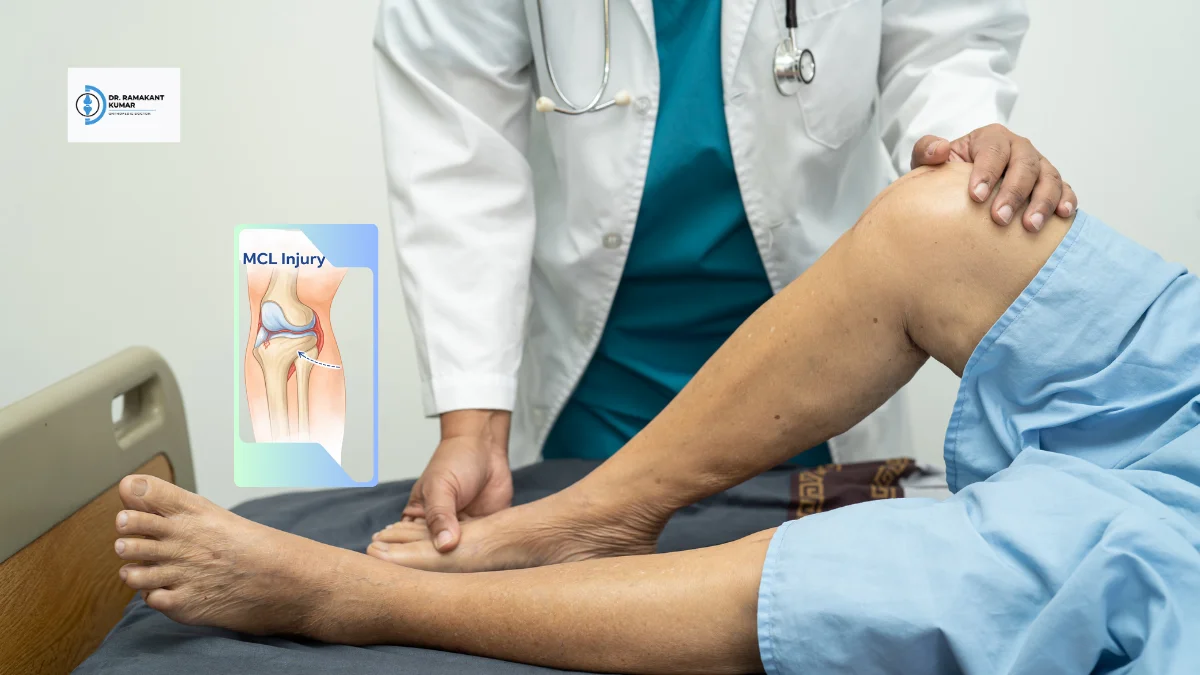
Knee ligament injuries are often misunderstood. Many patients come in saying they were told they have a “ligament tear,” but they are still not clear whether the problem is in the MCL, the ACL, or both. That confusion matters because MCL vs ACL injury treatment in Patna is not always the same. Some MCL injuries can improve with bracing and rehabilitation, while many ACL tears, especially in active patients, are more likely to need reconstruction depending on instability, activity demands, and associated damage inside the knee.
If your knee pain started after a twist, fall, sports injury, road accident, or sudden side impact, this guide will help you understand what may be happening and what treatment path usually makes sense. I will keep the explanation simple and practical so that you can make better decisions about MCL repair in Patna, MCL reconstruction, and ACL-MCL injury treatment without getting lost in medical jargon.
Contents
- 1 Is It an MCL Injury or an ACL Injury?
- 2 MCL vs ACL Injury: The Difference Patients Usually Notice
- 3 What Exactly Is an MCL Tear?
- 4 Symptoms That Should Make You Suspect an MCL Injury
- 5 When Does an MCL Tear Need Surgery?
- 6 MCL Repair vs MCL Reconstruction
- 7 MCL vs ACL Injury Treatment in Patna: Why the Plan Is Different
- 8 What Happens If Both ACL and MCL Are Injured?
- 9 How We Confirm Whether It Is MCL, ACL, or Both
- 10 What Should Patients Expect From MCL Surgery?
- 11 Recovery After MCL Repair or Reconstruction
- 12 MCL Surgery Cost in Patna
- 13 Why Choosing the Right Doctor Matters
- 14 What Happens If You Delay Treatment?
- 15 Frequently Asked Questions
- 16 Conclusion
Is It an MCL Injury or an ACL Injury?
This is one of the most important questions for any patient with a knee ligament problem.
The MCL, or medial collateral ligament, is the ligament on the inner side of your knee. Its job is to resist forces that push the knee inward and help stabilize the inner part of the joint. The ACL, or anterior cruciate ligament, sits deeper in the middle of the knee and plays a major role in rotational stability and in preventing the shin bone from moving too far forward.
In simple words:
- The MCL mainly protects the inner side of the knee
- The ACL mainly controls twist-related stability in the center of the knee
This difference is why the injury pattern can feel very different to the patient.
Common pattern of an MCL injury
An MCL tear often happens when the knee is hit from the outer side, forcing it inward. Patients commonly feel pain along the inner side of the knee, local tenderness, and sometimes a feeling of side-to-side looseness. Swelling may happen, but it is not always dramatic.
Common pattern of an ACL injury
An ACL tear more often happens with a twisting movement, sudden pivot, awkward landing, or abrupt change in direction. Many patients describe a pop at the time of injury, followed by swelling and a feeling that the knee is unstable or may give way.
MCL vs ACL Injury: The Difference Patients Usually Notice
A practical way to understand it is this:
| Feature | MCL Injury | ACL Injury |
| Main pain location | Inner side of knee | Deep inside knee |
| Usual mechanism | Side blow or valgus force | Twist, pivot, sudden turn |
| Swelling | May be mild to moderate | Often comes early and can be significant |
| Instability feeling | Inner side looseness | Knee giving way during turning or walking |
| Surgery need | Only in selected cases | More commonly needed in active or unstable knees |
This is why a patient searching for top MCL treatment in Patna near me should not assume that every ligament injury needs surgery. At the same time, it is also risky to assume that rest alone will solve every case. The right plan depends on which ligament is torn, how severe the tear is, whether the knee is unstable, and whether there is a combined injury such as an ACL with MCL tear. Combined ligament injuries do occur, and MCL tears are sometimes associated with ACL injuries.
What Exactly Is an MCL Tear?
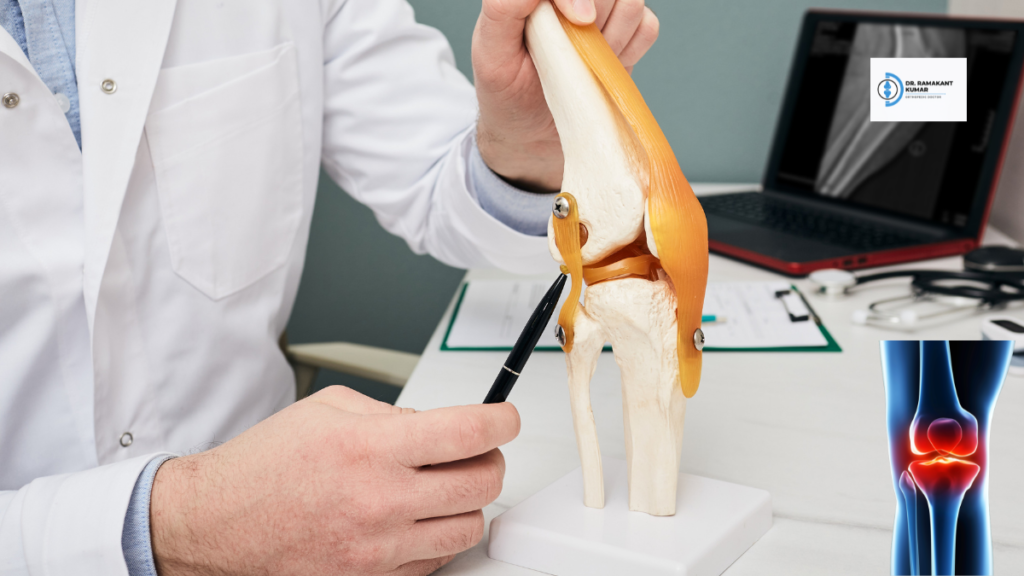
An MCL injury can range from a minor stretch to a complete tear.
Grade 1
The ligament is stretched but not badly torn. The knee is painful, but stability is usually preserved.
Grade 2
This is a partial tear. Pain is more obvious, swelling may be present, and the knee may feel less secure.
Grade 3
This is a complete tear. The ligament is no longer providing normal support, and instability becomes more important. Severe tears may take longer to heal, and some cases need surgery depending on instability and associated injuries.
One important point for patients looking for Doctors for MCL reconstruction repair in Patna is this: not every complete MCL tear automatically needs an operation. The decision depends on the quality of the ligament tissue, associated ACL injury, chronic looseness, and how your knee behaves clinically during examination.
Symptoms That Should Make You Suspect an MCL Injury
Patients often ignore early symptoms because they think it is just a sprain. That delay can create more trouble later.
You should take an MCL injury seriously if you have:
- Discomfort focused along the inner border of the knee joint
- Tenderness when touching the inner ligament area
- Swelling around the injured side
- Difficulty walking comfortably
- A feeling that the knee shifts or opens from the inner side
- Fear while turning, climbing stairs, or changing direction
When Does an MCL Tear Need Surgery?
This is where many patients get confused. Most isolated MCL injuries do not need surgery. They often improve with a brace, activity restriction, swelling control, and structured rehabilitation. Surgery usually becomes more relevant when the tear is severe, the knee remains unstable, the ligament has avulsed off bone, or the MCL injury is combined with other ligament damage such as an ACL tear.
In practical terms, I become more concerned when a patient has persistent inner-side looseness, difficulty trusting the knee during walking or turning, a high-grade tear on examination, or a combined ACL-MCL injury pattern. That is why MCL vs ACL injury treatment in Patna should never be decided only by reading an MRI line that says “ligament tear.” The real decision comes from matching the scan with symptoms, examination findings, and how unstable the knee actually is.
Read More: Bone Pain in Children – When to Worry and When to See a Doctor
MCL Repair vs MCL Reconstruction
Patients often search for mcl repair in patna, but they are not always told that repair and reconstruction are not the same thing.
MCL repair
MCL repair usually means the torn ligament is stitched back or reattached, typically when the injury is fresh and the tissue quality is still suitable. This can be considered in selected acute tears, especially when the ligament has torn off near its attachment and the surgeon feels the native ligament can be restored effectively. This is closer to what patients mean when they ask, “What is open repair of the MCL?” In simple terms, the damaged ligament is stitched or reattached instead of being replaced with a graft. The exact technique depends on where and how the ligament is torn.
MCL reconstruction
MCL reconstruction is different. Here, the damaged ligament is rebuilt using graft tissue when the native ligament is too weak, too scarred, too stretched out, or no longer repairable in a meaningful way. Reconstruction is usually considered more often in chronic instability, poor-quality tissue, or complex ligament injuries. So when patients search for Doctors for MCL Reconstruction Repair in Patna, what they really need is a surgeon who can first decide whether repair is possible or whether reconstruction will provide a more stable long-term result.
MCL vs ACL Injury Treatment in Patna: Why the Plan Is Different
This is the most important part for patients.
An MCL injury often has a good chance of healing without surgery if it is isolated and appropriately protected. An ACL injury is different. According to AAOS, ACL treatment depends heavily on the patient’s instability, age, activity level, and goals, and many active patients with symptomatic instability are more likely to need reconstruction, especially if they want to return to pivoting or demanding activity.
So the broad treatment difference is this:
- Many isolated MCL injuries can be treated non-surgically
- Many unstable ACL tears, especially in active patients, move toward reconstruction
- Combined ACL + MCL injuries need more careful planning than either injury alone
This is why a patient looking for Best Doctors For ACL MCL Tear Treatment In Patna should not focus only on the words “ligament surgery.” The better question is: which ligament is torn, how severe is it, is the knee unstable, and do both ligaments need to be addressed?
What Happens If Both ACL and MCL Are Injured?
Combined injuries are more complicated than isolated tears. In these cases, the MCL may sometimes be managed with bracing first while the ACL plan is decided based on knee stability, timing, swelling, and range of motion. In other cases, especially when instability is marked or the tissue pattern is unfavorable, surgical management may be needed for both. The final decision is individualized and should be based on examination, not assumptions.
From a patient perspective, this is exactly where expert assessment matters. A knee that has both rotational instability from the ACL and side instability from the MCL should not be treated casually. Improper timing or incomplete treatment can leave the patient with persistent looseness, poor confidence, and delayed recovery.
How We Confirm Whether It Is MCL, ACL, or Both
The diagnosis begins with a proper history. I want to know how the injury happened, whether there was a twist or side impact, whether the patient heard a pop, how quickly swelling appeared, and whether the knee gives way during walking or turning.
After that, physical examination becomes extremely important. Ligament testing helps us understand whether the instability is on the inner side like an MCL tear, deeper and rotational like an ACL tear, or combined. MRI is very useful, but it should support the clinical assessment, not replace it. This point is important because scans can identify a tear, but treatment still depends on the patient’s actual instability pattern and functional complaint.
What Should Patients Expect From MCL Surgery?
If surgery is needed, the exact approach depends on whether the case requires repair or reconstruction and whether other structures, such as the ACL or meniscus, also need treatment. In some cases, ligament procedures are done along with arthroscopic assessment of the knee because arthroscopy allows the surgeon to evaluate and treat internal knee damage through smaller incisions.
Patients should also understand that surgery is only one part of treatment. The final result depends heavily on rehabilitation, swelling control, restoration of motion, muscle activation, and following the recovery plan properly. After arthroscopic knee procedures, structured exercises and walking progression are commonly recommended as part of recovery.
Recovery After MCL Repair or Reconstruction
Recovery is one of the biggest concerns for patients. Many people search, “Can you walk after a MCL repair?” Yes, you can walk, but it starts with support and gradual progression rather than normal walking right away. Walking is usually started with support, and the progression depends on the type of injury and the procedure performed.
Can You Walk After a MCL Repair?
- In most cases, you can start walking early with a brace
- Weight bearing is usually gradual
- Crutches may be needed initially
- Full confidence in walking takes a few weeks
The key point is that walking is allowed, but controlled. Trying to walk normally too early can delay healing.
Recovery Timeline (Realistic Expectation)
- First 1–2 weeks: Pain control, swelling reduction, limited movement
- 3–6 weeks: Gradual increase in motion, physiotherapy begins
- 6–12 weeks: Improved strength and stability, walking becomes more comfortable
- 3–4 months: Return to routine daily activities
- 4–6 months: Return to sports or high-demand activity (depending on recovery)
Recovery may take longer in reconstruction cases or combined ACL-MCL injuries. Following physiotherapy strictly is as important as the surgery itself.
Read More: Shoulder Arthroscopy Guide: Glenoid, Labrum, Rotator Cuff & AC Joint Repair in Patna
MCL Surgery Cost in Patna
One of the most common questions is, “How much does MCL reconstruction surgery cost?”
What is the typical cost range for getting MCL reconstruction done?
In Patna, the cost of MCL surgery can vary widely depending on several factors. A general range is:
- ₹40,000 to ₹1,20,000 or more
What Affects the Cost?
- Type of procedure: repair vs reconstruction
- Hospital setup and facilities
- Surgeon’s experience
- Implants or graft used
- Whether ACL surgery is also required
If both ACL and MCL are injured, the overall cost will be higher because the procedure becomes more complex.
Patients searching for MCL repair in patna should focus not only on cost but also on correct diagnosis and treatment planning. Choosing only based on price can sometimes lead to incomplete or inappropriate treatment.
Why Choosing the Right Doctor Matters
Ligament injuries are not just about fixing a tear. They are about restoring stability, function, and long-term joint health.
If the diagnosis is not accurate or the treatment is not planned properly:
- The knee may remain unstable
- Pain can persist
- There is a higher risk of meniscus damage
- Early arthritis can develop over time
This is why patients often look for the best orthopedic doctor in Patna. What truly matters is:
- Correct identification of MCL vs ACL injury
- Understanding whether surgery is needed
- Choosing repair vs reconstruction appropriately
- Planning rehabilitation properly
What Happens If You Delay Treatment?
Ignoring an MCL or ACL injury is a common mistake.
Delaying proper care can lead to:
- Chronic knee instability
- Repeated episodes of the knee giving way
- Damage to cartilage and meniscus
- Reduced confidence in walking or sports
- Early wear and tear changes in the joint
The longer instability persists, the more difficult it becomes to restore normal knee function.
Frequently Asked Questions
How much can MCL reconstruction surgery cost in most cases?
The cost usually ranges between ₹40,000 to ₹1,20,000 or more in Patna, depending on the complexity, hospital, and whether other ligaments like ACL are involved.
Can you walk after a MCL repair?
Yes, walking is usually started early with support such as a brace or crutches, but full normal walking takes a few weeks.
What is open repair of the MCL?
It is a surgical method where the torn ligament is directly stitched or reattached, usually in fresh injuries where the tissue quality is good.
MCL vs ACL injury which is worse?
Neither is “worse” in all cases. ACL injuries often cause more instability and are more likely to need surgery, while many MCL injuries can heal without surgery if treated properly.
Do all MCL injuries need surgery?
No. Many MCL injuries heal with non-surgical treatment. Surgery is reserved for severe tears, instability, or combined injuries.
Conclusion
MCL and ACL injuries may sound similar, but their treatment approach can be very different. Understanding whether your problem is an isolated MCL tear, an ACL injury, or a combined ligament issue is the first and most important step. Many MCL injuries can heal well without surgery, while ACL tears and complex cases may require a more structured surgical plan.
What matters most is not just the MRI report, but how your knee feels, how stable it is, and how it behaves during examination. Early and accurate diagnosis can prevent long-term instability, repeated injury, and unnecessary complications.
If you are searching for MCL repair in patna or trying to decide between different treatment options, the right approach is to get your knee properly evaluated by scheduling an appointment with me, Dr. Ramakant Kumar, and follow a treatment plan that is specific to your condition, not a general assumption.
If your knee pain, instability, or ligament injury is not improving, do not delay. A timely assessment can make a significant difference in recovery and long-term knee health.