
Robotic Knee Replacement in Patna
Knee pain can gradually change everyday life. Walking to the market, standing after a long meeting, or going up stairs may become difficult when arthritis damages the joint. If pain persists despite medicines, physiotherapy, and other appropriate treatments, knee replacement may be worth discussing with an orthopedic surgeon.
Dr. Ramakant Kumar, an orthopedic and joint replacement surgeon in Patna with over 12 years of experience, evaluates knee problems and explains available treatment options. Robotic knee replacement uses computer-assisted technology to help plan surgery and position implants. Whether it is appropriate depends on the extent of joint damage, your health, and your goals—not simply on the availability of a robot.
- 12+ Years Experience
- MS Ortho, AIIMS New Delhi
- Gold Medalist


What Is Robotic Knee Replacement Surgery?
Robotic knee replacement surgery is a form of knee joint replacement in which a surgeon uses computer-assisted guidance to plan bone preparation and implant positioning. This surgical technique can assist surgeons in performing either a complete or a partial knee joint replacement. The technology can help the surgeon assess alignment and follow a patient-specific surgical plan.
The robot does not operate independently. The orthopedic surgeon controls the procedure and makes the clinical decisions. Different systems use different imaging and mapping methods, so the exact steps vary.
Robotic assistance can improve the accuracy of certain measurements, but it does not guarantee a quicker recovery, a pain-free knee, or a longer-lasting implant.
When Should You Consider Knee Replacement?
Knee replacement is usually considered for advanced arthritis that substantially affects daily life despite suitable non-surgical care. You may notice knee pain while bending, difficulty getting out of a chair, or pain when going up stairs. Repeated knee swelling, stiffness after rest, and disturbed sleep also deserve attention.
Seek an orthopedic assessment if you have:
Limited Walking
Pain or stiffness that limits walking and routine activities
Recurring Swelling
Swelling that repeatedly returns or a knee that will not straighten comfortably
Night Pain
Pain at rest or at night despite appropriate treatment
Leg Deformity
Progressive bow-leg or knock-knee deformity
Stairs & Chairs
Difficulty climbing stairs or standing from a seated position
These symptoms alone do not establish that surgery is needed. Swelling may follow injury or inflammation, and painful stairs can have causes unrelated to advanced arthritis. Sudden severe swelling with fever, an intensely hot joint, or inability to bear weight warrants urgent medical assessment.
Which Knee Conditions May Require Replacement?
Advanced Osteoarthritis
Osteoarthritis gradually damages the protective cartilage that allows the knee joint to move smoothly. As the cartilage wears away, patients may experience persistent pain, swelling, stiffness, and difficulty walking or climbing stairs. When joint damage becomes severe and non-surgical treatments no longer provide sufficient relief, knee replacement surgery may be considered.
Rheumatoid Arthritis
This autoimmune condition causes ongoing inflammation in the joints, which can eventually damage cartilage and bone. Although medications help control inflammation and manage symptoms, knee replacement may be necessary when significant joint damage continues to affect mobility and daily activities despite appropriate treatment.
Post-Traumatic Arthritis
Arthritis can develop years after a serious knee injury, such as a fracture or ligament damage. Patients may experience chronic pain, reduced movement, joint instability, or progressive deformities such as bow legs or knock knees. The need for knee replacement depends on the extent of joint damage, severity of symptoms, imaging findings, and overall medical fitness.
Can Knee Replacement Be Avoided?
Many patients can manage knee arthritis without an operation, particularly when symptoms are mild or moderate. Your clinician should explain the benefits and limitations of each option.
These measures can reduce symptoms but cannot reliably rebuild cartilage lost through advanced osteoarthritis. When pain and disability remain severe despite appropriate care, delaying surgery indefinitely may mean continuing difficulty with sleep, movement, and independence.
The decision should be shared, informed, and based on your circumstances.
Depending on the diagnosis, treatment may include:
- Supervised strengthening exercises
- Weight management where appropriate
- Activity modification
- Walking aids
- Pain-relieving medicines
- Selected injections
Robotic Total and Partial Knee Replacement
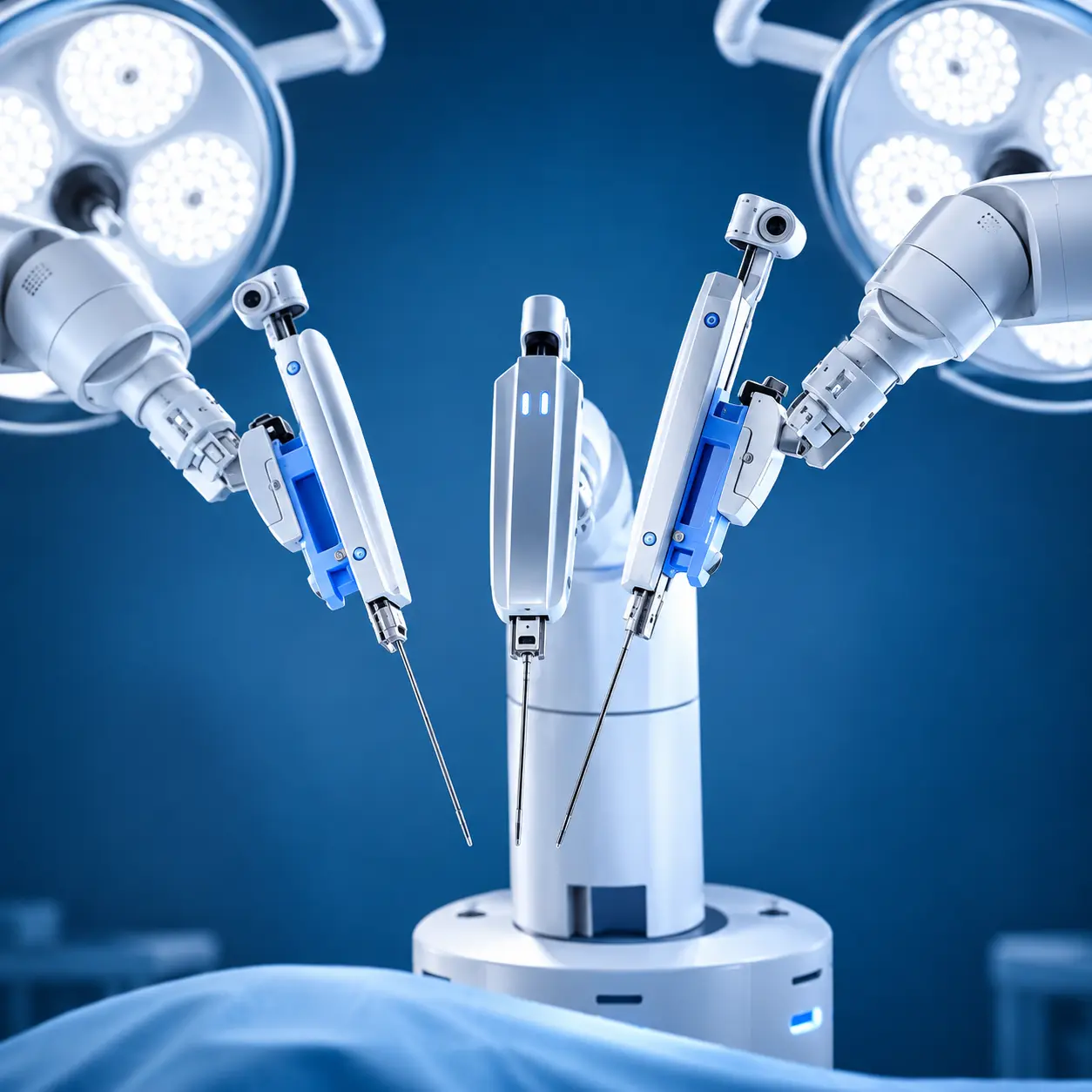
Robotic Total Knee Replacement
Total knee replacement is generally considered when arthritis affects several parts of the joint. The surgeon removes damaged joint surfaces and replaces them with artificial components, commonly made of metal and medical-grade plastic. Robotic guidance may assist with alignment planning and implant placement.
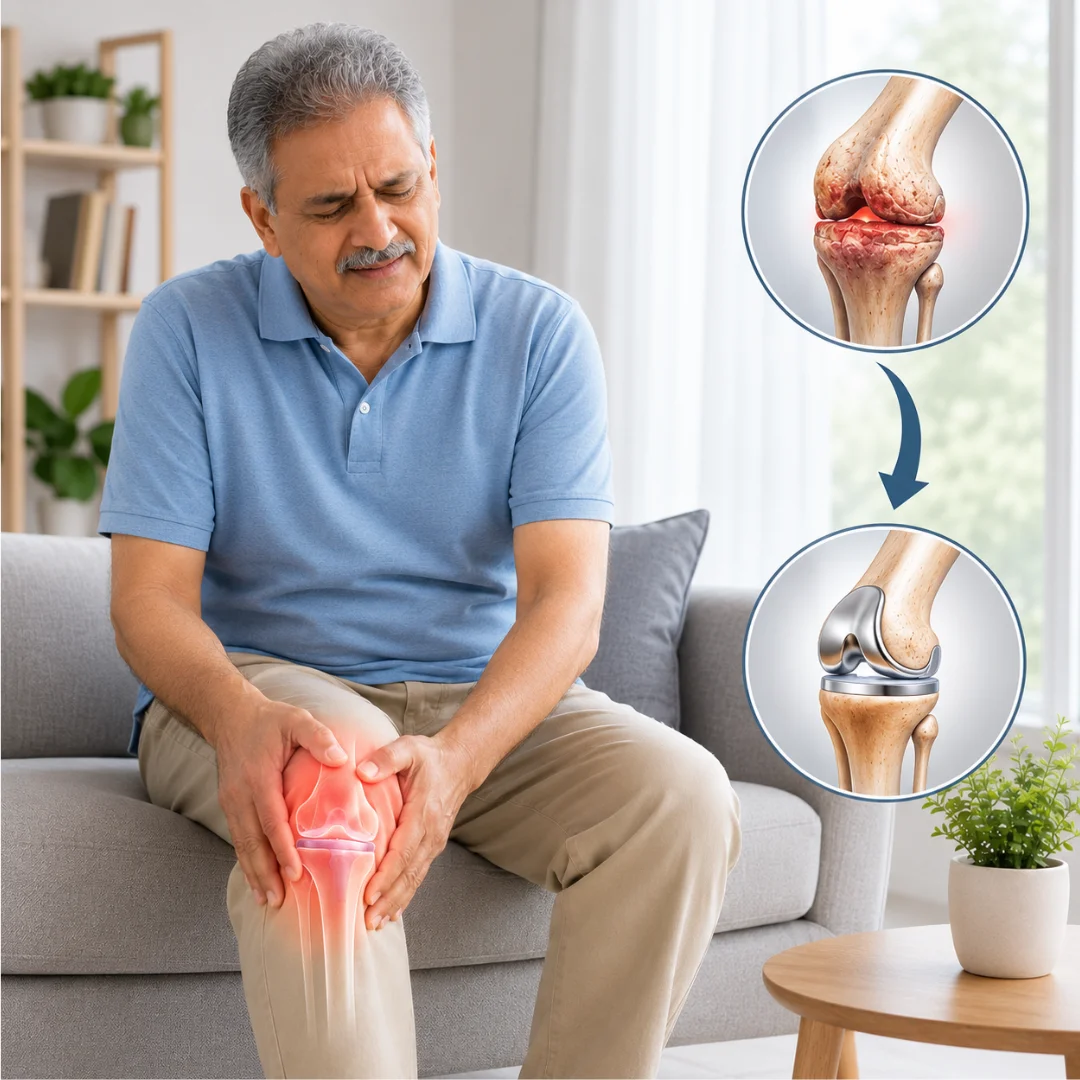
Robotic Partial Knee Replacement
Partial knee replacement treats one damaged compartment while preserving more of the natural joint. It is suitable only for selected patients whose remaining cartilage, ligaments, and alignment meet the required criteria. A patient with widespread arthritis is unlikely to benefit from replacing only one compartment.
The choice between partial and total replacement is made after examining the knee and reviewing suitable imaging. Both procedures involve recovery and rehabilitation; neither is automatically appropriate because of age alone.
How Is Robotic Knee Replacement Surgery Performed?
Before robotic knee replacement surgery, the team checks your knee condition and general health. Some robotic systems use preoperative CT imaging; others use X-rays or measurements recorded during the operation. Your surgeon can explain which system and preparation are relevant to your treatment.
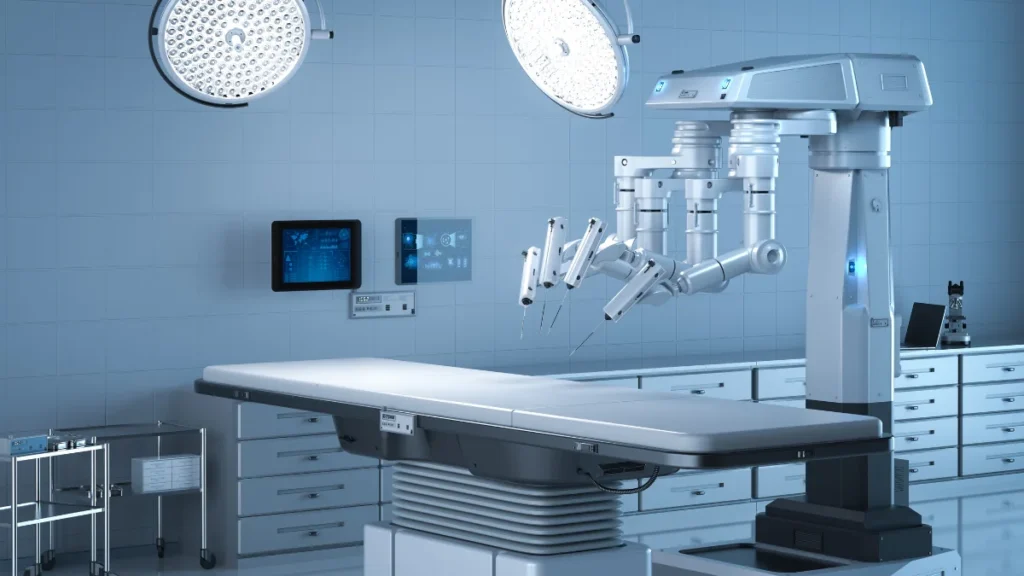
The process generally includes:
1. Assessment and planning
Review examination findings, X-rays, medicines, and health conditions; plan implant size and alignment.
2. Anesthesia
An anesthetist discusses spinal or general anesthesia and an appropriate pain-control plan.
3. Joint preparation
The surgeon removes damaged surfaces, using robotic guidance where the chosen technique supports it.
4. Implant positioning
Components are positioned and knee movement, alignment, and ligament balance are checked.
5. Early rehabilitation
The team monitors pain and the wound and helps you begin safe movement when medically appropriate.
The technology assists the surgeon; it is not a substitute for surgical judgment, infection prevention, or rehabilitation.
Advantages and Disadvantages of Robotic Knee Replacement
Potential Advantages
Robotic systems can support detailed surgical planning and improve the accuracy of certain alignment or positioning measurements. This may be especially helpful when precise assessment of knee anatomy is important.
The potential benefits must be weighed against the added equipment requirements, possible additional cost, and differences between robotic platforms.
Limitations & Risks
Current evidence does not consistently establish that robotic-assisted surgery provides superior long-term pain relief, implant longevity, or patient function compared with well-performed conventional surgery.
Both methods carry risks, including infection, blood clots, bleeding, stiffness, persistent discomfort, and implant-related problems. A more technologically complex operation is not automatically a more suitable one.
Robotic Knee Replacement vs Conventional Knee Replacement
Both operations aim to replace damaged knee surfaces, reduce pain, and improve function. The central difference is how the surgeon plans and guides preparation and implant positioning.
| Feature | Robotic-Assisted Replacement | Conventional Replacement |
|---|---|---|
| Planning | Computer-assisted guidance | Established surgical planning |
| Bone preparation | Robotic guidance may assist | Conventional instruments |
| Surgical control | Surgeon remains in control | Surgeon remains in control |
| Cost | Additional technology charges may apply | Often lower technology-related charges |
| Recovery | Depends on patient and procedure | Depends on patient and procedure |
Neither method guarantees an outcome. Ask which approach is appropriate for your knee and why, rather than judging a procedure by its name alone.
Robotic Knee Replacement Cost in Patna
Robotic knee replacement cost in Patna is not a single fixed amount. It depends on whether you need partial or total replacement, one knee or both, the chosen implant, the operating hospital, and any other medical needs. Published figures for robotic knee replacement surgery cost in India can differ substantially because hospital packages may include different services.
Ask what happens if the hospital stay is longer than expected, and check any insurance terms or exclusions. An individualized quotation should follow medical assessment; an unverified online price should not be treated as a guarantee.
Before agreeing to surgery, request a written estimate that states whether it covers:
- Surgeon's fee
- Anesthetist's fee
- Implant
- Robotic equipment
- Investigations
- Hospital room
- Medicines
- Physiotherapy
- Follow-up
Recovery After Robotic Knee Replacement
Recovery is gradual. Many patients begin standing or walking with assistance within a day or two, depending on medical fitness, anesthesia, and the type of procedure. Pain and swelling are expected initially, and physiotherapy helps restore movement and strength.
Prepare your home by removing trip hazards, arranging a stable chair, and keeping everyday items within easy reach.
First two weeks
Follow wound-care instructions, use prescribed medicines, and walk with the advised support. Attend follow-up visits.
Weeks 2–6
Gradually increase walking and knee exercises as guided. A walking aid may still be needed.
Weeks 6–12
Many everyday tasks become easier, but swelling or stiffness may persist. Driving and work require individual clearance.
Three months onward
Strength and confidence may continue to improve over several months; keep up rehabilitation.
Seek prompt medical care for fever, increasing wound redness or discharge, worsening calf swelling, or unexpectedly severe pain. Sudden breathlessness or chest pain requires emergency care.
Preparing for Surgery and Choosing a Treatment Plan
Preoperative Tests
Preoperative assessment may include weight-bearing knee X-rays, blood tests, ECG, and further investigations based on medical history and the robotic platform.
Share Your History
Tell the team about diabetes, blood pressure problems, heart disease, allergies, and all medicines, including blood thinners. Do not stop prescribed medicines without medical advice.
Ask Questions
Ask about alternatives, anesthetic risks, implant choice, rehabilitation, and expected limitations. Where robotic assistance is proposed, the actual platform and operating facility should be confirmed during consultation.
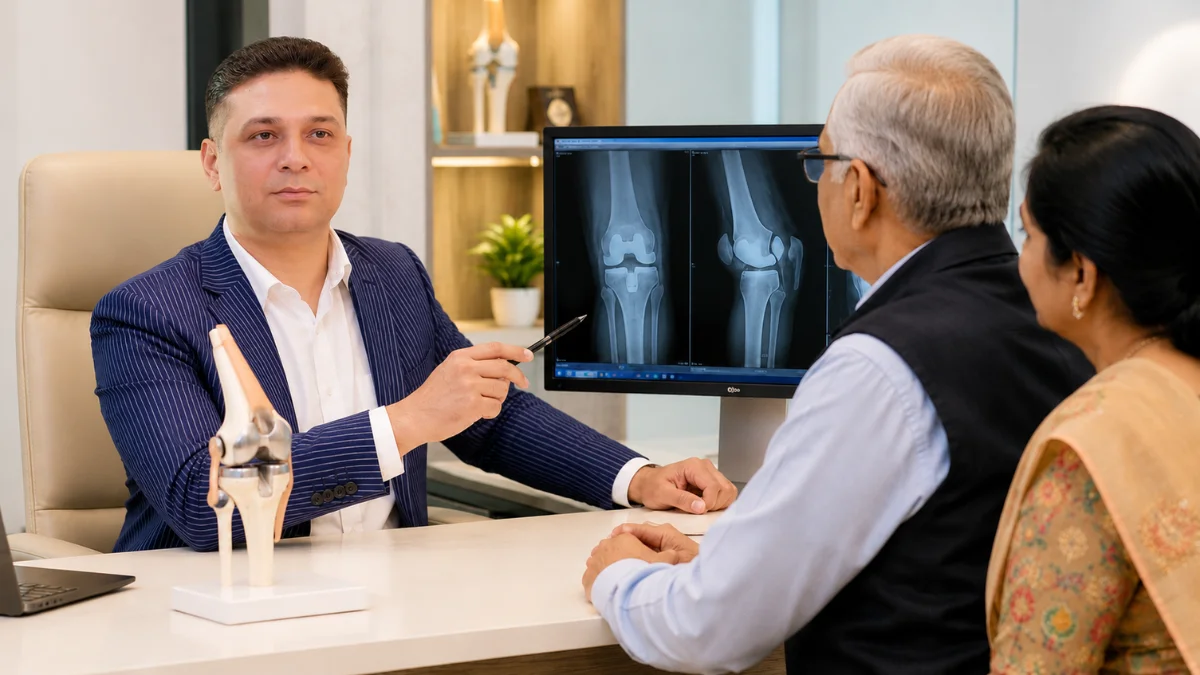
Dr. Ramakant Kumar assesses arthritis severity, knee alignment, previous treatments, general health, and activity goals before discussing whether surgery is indicated.

Dr. Ramakant Kumar's Orthopedic Experience
- MBBS (Gold Medalist)
- MS Ortho – AIIMS New Delhi
- DNB Orthopaedics
- 12+ Years Experience
Dr. Ramakant Kumar has more than 12 years of orthopedic experience. His qualifications include MBBS (Gold Medalist), MS Orthopaedics from AIIMS New Delhi, and DNB Orthopaedics, along with fellowship training in Singapore and South Korea. His practice includes joint replacement, arthroscopy, sports injury care, and complex fracture management.
For patients considering knee replacement surgery in Patna, relevant questions include the surgeon’s training, experience with the recommended procedure, explanation of possible complications, and the plan for rehabilitation and follow-up. Qualifications and careful communication matter more than promotional rankings.
Frequently Asked Questions About Robotic Knee Replacement
What is robotic knee replacement?
It is knee replacement performed by an orthopedic surgeon with computer-assisted technology to support planning and implant positioning. The surgeon controls the operation. Dr. Ramakant Kumar assesses the knee, reviews imaging, and discusses whether total replacement, partial replacement, or continued non-surgical care is appropriate.
What is the recovery time for robotic knee replacement?
Many patients begin walking with assistance within 24–48 hours, but progress varies. Routine activities often become easier over 6–12 weeks, and improvement can continue for several months. Dr. Ramakant Kumar considers medical fitness, the procedure performed, and rehabilitation progress when advising on recovery.
Robotic knee replacement vs conventional knee replacement: what is the difference?
Robotic surgery adds computer-assisted planning or guidance to selected surgical steps; conventional surgery uses established instruments and techniques. Both can relieve symptoms in appropriately selected patients. Neither method guarantees a particular recovery time or long-term result. The surgeon should explain the choice in relation to your knee condition.
Is knee replacement 100% successful?
No. Knee replacement often improves pain and movement, but persistent symptoms or complications can occur. Dr. Ramakant Kumar emphasizes clinical assessment, discussion of risks, and postoperative rehabilitation as part of treatment planning. Your individual outlook depends on health, joint condition, surgery, and recovery.
How to sleep after knee replacement?
Choose a sleeping position that feels comfortable while following the postoperative guidance provided by your surgeon. Lying on your back with the leg supported may help early on; side sleeping can be possible when comfortable and permitted. Avoid keeping a pillow directly behind the knee for long periods, because this can make straightening the knee more difficult. Discuss uncontrolled nighttime pain with your care team.
Discuss Your Knee with Dr. Ramakant Kumar
A careful consultation can clarify what is causing your knee pain, whether surgery is truly indicated, and which approach—robotic, conventional, or non-surgical—suits your knee. Bring any previous X-rays, MRI reports, and prescriptions.
Advanced Bone & Joint Clinic
East Boring Canal Road, Near Panchmukhi Hanuman Mandir, Sri Krishna Nagar, Kidwaipuri, Patna – 800001 (tap for directions)
OPD Hours (Mon–Sat)
Morning: 9 AM – 11 AM · Evening: 5 PM – 9 PM · Sunday: Closed
Call / WhatsApp: +91 70703 12214
Tap to call the clinic