

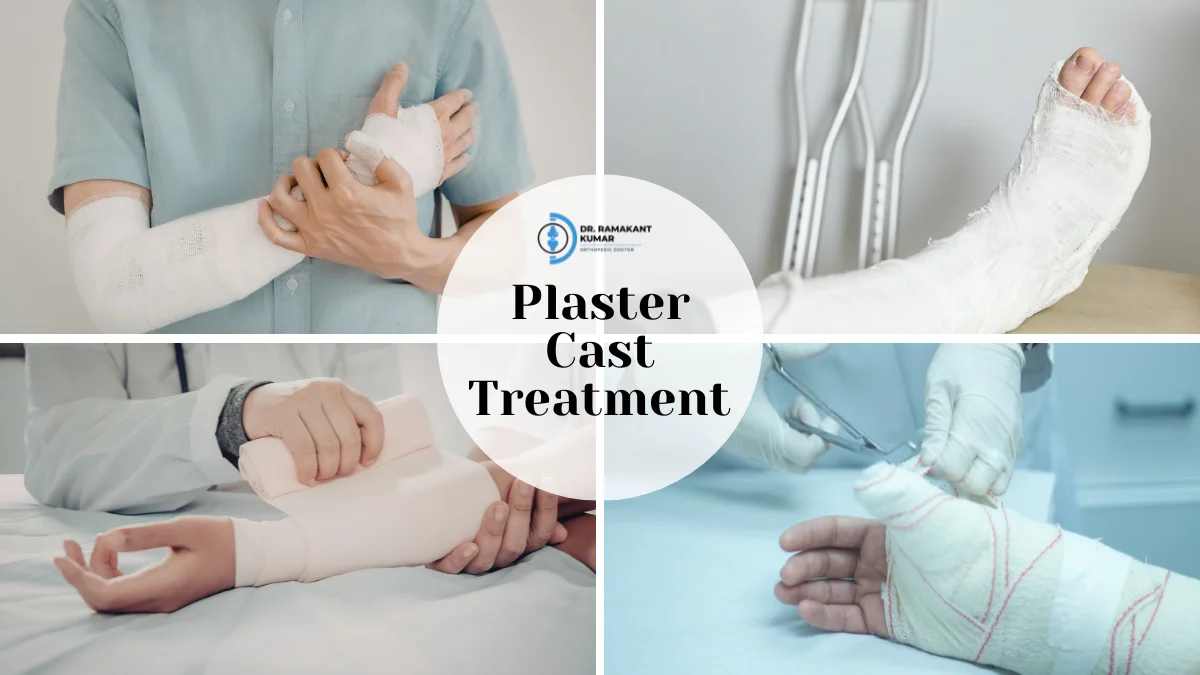
A bone fracture does not always mean surgery. In many cases, the safest and most effective treatment is proper immobilization with a plaster cast. The real goal is not just to cover the injured area. It is to hold the broken bone in the correct position so the healing process can happen without unwanted movement, bending, or shifting.
For patients looking for bone fracture treatment in Patna, this is one of the most common questions: will I need a plaster cast, or will I need an operation? The answer depends on the type of fracture, how much the bone has moved, the patient’s age, the injured body part, and how stable the fracture looks on X-ray. In my practice, I always explain that a cast is not a shortcut treatment. When used in the right case, it is a proper medical treatment that gives the bone the stability it needs to heal well.
When is plaster cast needed for a bone fracture?
A plaster cast is usually advised when the fracture is stable enough to heal without metal implants or surgical fixation. This is often possible in fractures where the bone is cracked, minimally displaced, or well aligned after manual correction. The purpose of the cast is to keep the fracture quiet and protected during the most important phase of healing.
Plaster cast treatment is commonly used in cases like:
- hairline fractures where the bone has a small crack but has not shifted
- simple closed fractures where the skin is intact and the bone position is acceptable
- stable fractures that are unlikely to move further after immobilization
- children’s fractures, especially greenstick injuries, because young bones heal faster and remodel better
- fractures that can be reduced and held in position without surgery
This is why fracture treatment in Patna should never begin with guesswork. Two people may both say they have a “broken bone”, but one may need a short cast for a few weeks while the other may need urgent surgery. The X-ray pattern matters more than the pain alone.
Read More: MCL Repair in Patna: Best Doctor, Cost & Recovery Guide
When is plaster not enough?
This is equally important for readers to understand. A cast works only when it can actually control the fracture. If the broken fragments are badly displaced, rotated, shortened, unstable, or involving an important joint surface, a cast alone may not be the right option. In such cases, trying to manage everything with plaster can lead to poor healing, deformity, stiffness, or long-term functional problems.
A cast may not be enough in fractures such as:
- open fractures where the wound communicates with the broken bone
- displaced fractures that cannot be aligned properly
- joint fractures where precise positioning is necessary
- multiple fragment fractures
- fractures with nerve, vessel, or severe soft tissue injury
That is why choosing the best orthopedic doctor in Patna is not just about getting a cast applied quickly. It is about making sure the fracture is diagnosed correctly and the treatment matches the actual injury pattern.
Types of fracture bones that usually need plaster treatment
Many patients search for the types of fracture bones that can heal in plaster. In practical terms, we do not decide treatment by label alone. We decide by stability, alignment, and location. Still, some fracture patterns more commonly respond well to cast treatment.
Hairline fracture
A hairline fracture is a thin crack in the bone. These injuries may cause pain, swelling, and difficulty using the limb, but the bone has not broken into separate moving pieces. In many of these cases, immobilization with a cast or slab gives good results.
Simple fracture
A simple fracture means the bone is broken in a clean pattern without major fragmentation. If the position is acceptable, a plaster cast can hold it safely during healing.
Closed fracture
A closed fracture means the skin is not broken. Many closed fractures can be treated in plaster if the alignment is stable and there is no major displacement.
Stable fracture
This is one of the most important concepts in cast treatment. A stable fracture is one that is unlikely to shift after proper immobilization. These are often the best candidates for plaster.
Greenstick fracture
This is commonly seen in children. The bone bends and cracks without breaking fully across. Because children’s bones are softer and heal differently, plaster immobilization often works very well.
Main fracture plaster types and when each one is used
Patients often think all casts are the same, but that is not true. One of the most useful things to understand during bone fracture treatment in Patna is that different fracture plaster types are chosen for different clinical needs. The material, shape, and extent of the cast all matter. We do not simply wrap plaster around the limb and wait. We choose a cast based on swelling, fracture location, bone stability, and how much control the injury needs.
POP cast
POP means Plaster of Paris. This is the traditional plaster cast many patients know well. It molds very well around the limb, which makes it helpful when we want close fitting support after reducing a fracture. It is often used in fresh fractures because it can be shaped accurately around the injured area.
The advantage of POP is its molding quality. The limitation is that it is heavier than fiberglass and it does not tolerate water. In simple terms, POP is often preferred when exact contouring matters more than convenience.
Fiberglass cast
Fiberglass is lighter and stronger than POP. It also looks cleaner and is often more durable during day-to-day use. In selected fractures, especially once swelling has settled, fiberglass can be a good option because it gives firm support without as much bulk.
Patients usually like it because it feels lighter, but it is not automatically better for every fracture. The right cast is the one that gives the fracture the control it needs, not just the one that feels modern.
Back slab or splint
This is very commonly used in the early stage. A back slab does not fully surround the limb like a complete cast. It supports the fracture while leaving some room for swelling. That makes it especially useful during the first few days after injury, when tight circumferential casting may become risky.
For many fresh fractures, I prefer to begin with a slab first, reassess swelling, and then convert it into a full cast if needed. This approach is safer in patients whose swelling is still increasing.
Circular cast
A circular cast fully surrounds the injured part. This is usually used when the fracture is already reduced or when the swelling phase is controlled. It gives better overall immobilization than a temporary slab, but it must be applied carefully because a tight circular cast can create pressure problems if the limb swells more later.
Soft cast
Soft cast is not suitable for every broken bone, but it can be useful in selected minor fractures, stable injuries, and some pediatric cases. It offers support with a bit more flexibility and can sometimes improve comfort in low-risk situations.
Read More: Robotic Hip Replacement Now in Patna: Safe, More Precise for Hip Pain Relief
Removable plaster for fracture: when is it useful?
Many patients specifically search for removable plaster for fracture because they want comfort, easier bathing, or the ability to take it off when needed. This is understandable, but it is important to be clear: removable support is helpful only in the right fracture. It is not a safer option just because it feels more convenient.
A removable plaster for fracture is usually considered in situations like:
- very stable fractures
- minor wrist or hand injuries
- selected ankle injuries
- late phase healing, when rigid immobilization is no longer necessary
- cases where controlled exercises need to begin under guidance
The biggest benefit is practicality. Skin care is easier, hygiene is easier, and some patients can begin supervised motion at the correct stage. But the limitation is patient compliance. If the support is removed too often or used casually, the fracture may not heal in the position we want.
This is why I tell patients not to choose a removable option on their own. First we decide whether the fracture is stable enough for that kind of support. Then we decide when to shift from rigid casting to removable support.
How plaster cast is applied in a proper fracture case
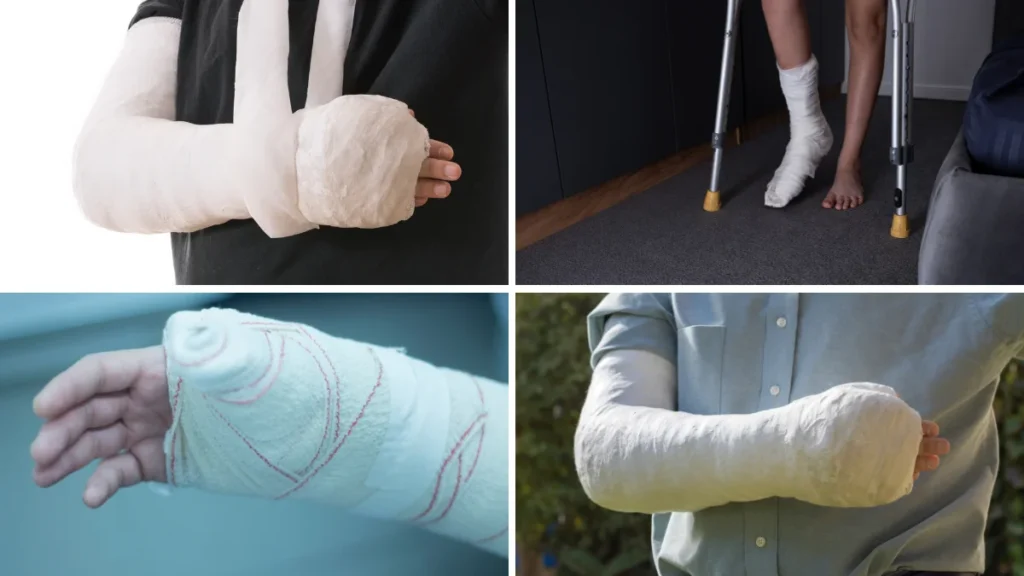
A good cast starts before the plaster touches the skin. Proper application is a clinical process, not a wrapping procedure. If the fracture has shifted, the first step may be reduction, which means bringing the bone into a better alignment before immobilization.
The usual process looks like this:
First, we examine the injured area carefully and study the X-ray. We check not only where the fracture is, but also whether it is angulated, displaced, rotated, or shortened. That decides whether direct casting is possible or whether the fracture needs reduction first.
Second, padding is applied to protect the skin and soft tissues. This step is important because poor padding can lead to pressure sores, edge irritation, or painful cast rubbing.
Third, the plaster material is applied in a position that supports correct healing. This is where experience matters. A cast should not only feel tight and firm. It should hold the limb in the right posture for that particular fracture.
Finally, the cast is checked after application. We assess finger or toe movement, swelling, circulation, and pain response. A cast is only successful if it stabilizes the fracture without compromising the surrounding tissues.
Read More: Best Robotic Knee Replacement in Patna – Total & Partial Knee Surgery Options
How long does a plaster cast stay?
This depends on the bone involved, the fracture pattern, the age of the patient, and whether healing is progressing properly on follow-up X-rays. There is no single number that suits every case.
In general:
- small hand or finger fractures may need around 3 to 4 weeks
- wrist fractures often need around 4 to 6 weeks
- forearm fractures may require 6 weeks or more
- leg fractures may need a longer period depending on stability and weight-bearing restrictions
- children’s fractures often heal faster than adult fractures
What matters most is not the calendar alone. The fracture should show clinical and radiological signs of healing before the cast is discontinued. Taking it off too early can delay union or allow the bone to move again.
Plaster cast care: what you should and should not do
A cast only works well if it is looked after properly. Many patients assume the main job is done once the plaster is applied, but the healing period is just as important. A well-applied cast can still cause trouble if it gets wet, becomes loose, or is ignored when warning signs appear.
You should keep the cast dry at all times. A wet plaster can soften, lose its shape, and stop supporting the fracture correctly. Moisture can also irritate the skin and create an unpleasant smell inside the cast. During bathing, the cast should be protected carefully. If it gets soaked, it should be checked rather than ignored.
You should also keep the injured limb elevated, especially in the first few days. This helps reduce swelling and discomfort. For an upper limb cast, keeping the hand raised above elbow level is useful. For a leg cast, keeping the foot elevated when resting helps control swelling better.
Do not insert pens, sticks, or any pointed object inside the cast to scratch itching skin. This is a very common mistake. What feels like a small scratch can injure the skin badly and lead to infection or sores that remain hidden until the cast is removed.
You should not walk on a cast unless your doctor has clearly allowed weight bearing. Some fractures need strict protection even if the pain starts feeling less. Pain improvement does not always mean the bone is ready for stress.
A cast should also be checked if it becomes loose. As swelling comes down, some casts stop fitting properly. That can reduce fracture control, which is especially important in the early healing phase.
Warning signs after plaster cast that should not be ignored
Patients often ask me how to know whether the cast is fine or becoming a problem. This is an important part of fracture treatment in Patna because early recognition can prevent serious complications.
You should seek urgent review if you notice:
- increasing pain that does not improve with rest and medicines
- excessive swelling of fingers or toes
- numbness or tingling
- bluish or pale fingers or toes
- inability to move the digits normally
- a cast that feels suddenly too tight
- foul smell or discharge coming from inside the cast
- burning sensation or severe pressure at one point
These symptoms can point to circulation problems, nerve pressure, excessive swelling, skin breakdown, or a cast that is no longer safe. A good cast should feel supportive, not dangerous. If the pain keeps getting worse instead of slowly settling, it should not be dismissed.
Read More: Bone Pain in Children – When to Worry and When to See a Doctor
Plaster cast removal: what patients should expect
Cast removal worries many patients, especially children and older adults. The common fear is that the machine used to cut the cast will cut the skin. In reality, cast removal is usually safe when done properly. The cast saw vibrates rather than spinning like a normal blade, so it is designed to cut hard cast material, not healthy skin.
After removal, the limb may look different for a short time. The skin can appear dry or flaky, the muscles may look smaller, and the joint may feel stiff. This is expected after immobilization. It does not mean the treatment has failed.
The next step after cast removal depends on the fracture and the joint involved. Some patients only need gradual return to movement. Others need a brace, exercises, or physiotherapy to restore motion and strength. This phase is often underestimated, but it matters a lot. A healed fracture with a very stiff joint is still a functional problem.
Plaster cast for fracture price in Patna
Patients also search for plaster cast for fracture price because they want to understand the expected cost before starting treatment. The exact amount can vary, and it is better to explain the factors honestly rather than giving one fixed number that may not apply to every case.
The cost usually depends on:
- which bone is fractured
- whether the cast is temporary or full
- whether reduction is needed before cast application
- whether POP or fiberglass is used
- how many follow-up visits and repeat X-rays are required
In general, the plaster cast for fracture price may look simple at first, but fracture care is not only the cast material. It includes proper examination, imaging, alignment if needed, monitoring, and follow-up. A cheaper cast is not always a better treatment if the fracture is not assessed properly.
If a patient is comparing options for bone fracture treatment in Patna, I would advise looking beyond the plaster cost alone. The more important question is whether the fracture is being managed correctly from the start.
When surgery is needed instead of plaster
This is where a lot of patients get confused. They want to avoid surgery, which is understandable, but avoiding surgery should not come at the cost of poor bone healing. A cast is a good treatment only when it can hold the fracture in a safe and acceptable position.
Surgery is often considered when:
- the fracture is badly displaced
- the broken bone is unstable and likely to move again
- the fracture extends into a joint and needs precise alignment
- there are multiple fragments
- the fracture is open
- there is associated nerve or vessel injury
- the bone cannot be held properly in a cast even after reduction
In these cases, an operation may offer better alignment, better stability, and a more predictable recovery. The real decision is not “cast versus surgery” in a general sense. It is “which treatment gives this specific fracture the best chance of healing well”.
Read More: Fractured a Bone in Patna? Best Treatment Options That Speed Up Healing
Why the right orthopedic evaluation matters
Good fracture management starts with diagnosis, but it also depends on follow-up judgment. A fracture that looks acceptable on day one may shift later. A cast that fits well initially may become loose. A borderline fracture may start showing signs that surgery would be better after reassessment.
That is why patients looking for the best orthopedic doctor in Patna should not focus only on who can apply a cast quickly. They should look for someone who can evaluate fracture stability properly, explain the treatment plan clearly, and monitor healing until recovery is complete.
For patients needing fracture treatment in Patna, the aim should always be the same: correct bone alignment, safe immobilization, timely review, and return of function. That is what decides whether the result will be good in the long run.
Conclusion
Plaster cast treatment remains one of the most effective ways to manage many stable fractures without surgery. However, the outcome depends on selecting the right case, applying the correct type of cast, and monitoring the healing process carefully. Not every broken bone needs surgery, but at the same time, not every fracture should be treated with plaster alone.
In my practice, I always focus on identifying the exact fracture pattern before deciding the treatment plan. A timely evaluation helps prevent complications, reduces recovery time, and improves long term results. If you or your family member has suffered a fracture, do not delay your assessment. Proper bone fracture treatment in Patna begins with understanding the fracture pattern, not just controlling pain.
I am Dr. Ramakant Kumar, and I personally evaluate each fracture, review your X rays carefully, and recommend the most appropriate treatment, whether it is plaster cast or another option. If you are experiencing pain, swelling, or difficulty moving after an injury, I recommend getting checked as soon as possible.
You can call to book your appointment or visit my clinic directly for evaluation and treatment. Early diagnosis and timely plaster cast treatment can help you recover faster and avoid long term complications.