

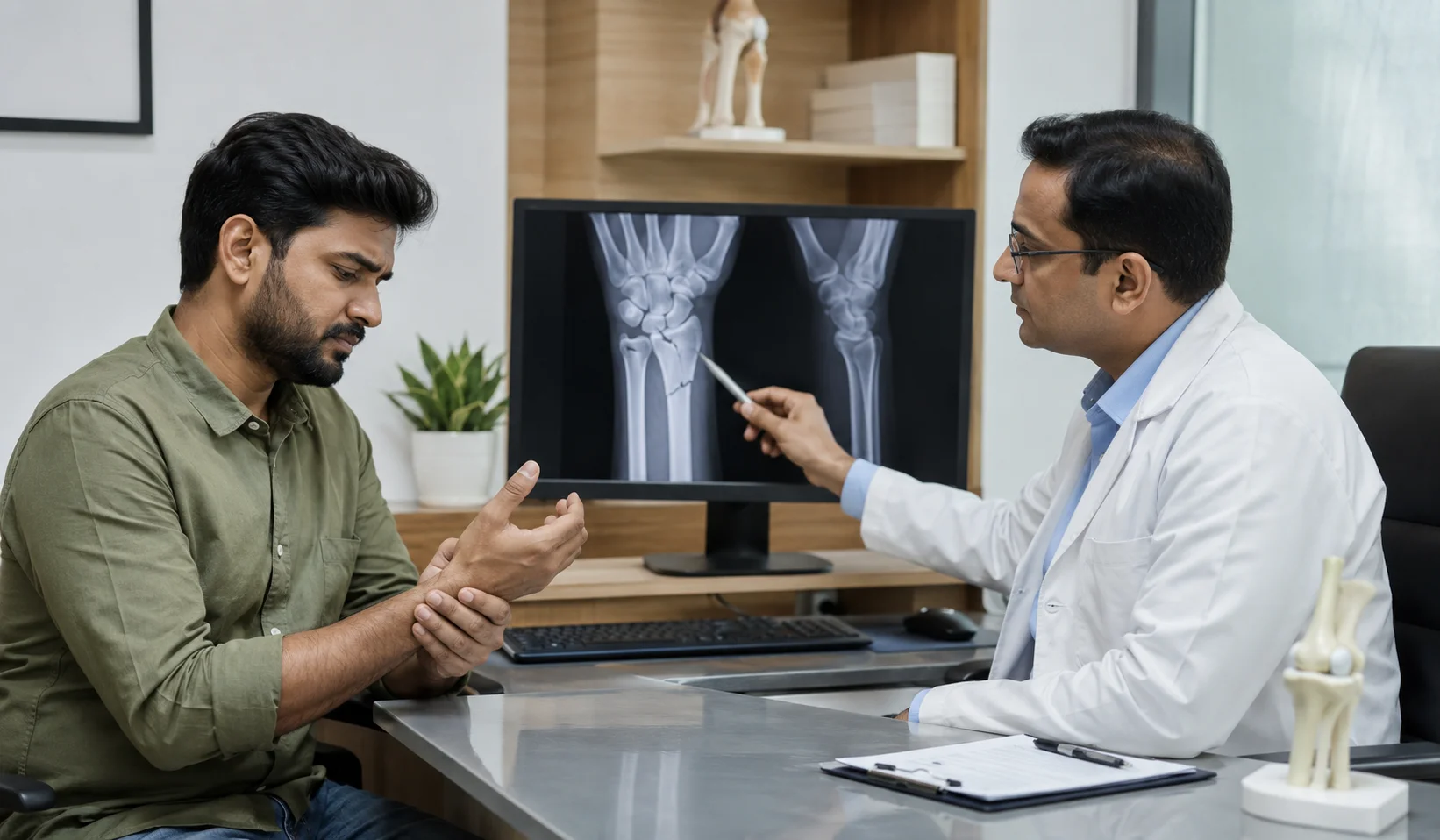
A fracture does not always look like a serious injury in the beginning. Many people think a bone is broken only when there is severe pain, visible deformity, or a major accident. But in many real cases, a fracture may first appear as swelling after a fall, sharp pain while walking, bruising, tenderness over one area, or difficulty moving the wrist, ankle, shoulder, knee, or foot.
This is why a bone injury should not be judged only by how it looks from outside. A patient may still move the injured part slightly and still have a fracture. Some people even walk for a short distance after a small crack in the ankle, foot, or leg bone. The danger is that delayed diagnosis can affect healing, alignment, movement, and recovery time.
Patients looking for the best orthopedic doctor in Patna usually want simple and practical answers after an injury. They want to know whether the pain is only a sprain, whether an X-ray is needed, whether plaster will be enough, and whether surgery may be required. Understanding the common types of fractures can help patients know when symptoms need proper medical attention.
Contents
- 1. What Is a Fracture?
- 2. What is the difference between a simple fracture and complex bone fracture treatment in Patna?
- 3. Why the Type of Fracture Matters
- 4. 1. Closed Fracture
- 5. 2. Open Fracture
- 6. 3. Displaced Fracture
- 7. 4. Comminuted Fracture
- 8. Everyday Symptoms That May Indicate a Fracture
- 9. When Should You Get a Bone Injury Checked?
- 10. How Fractures Are Diagnosed
- 11. Treatment Options for Fractures
- 12. What Patients Should Know About Recovery
- 13. Mistakes to Avoid After a Bone Injury
- 14. Fracture Care, Appointment Guidance, and Final Advice
- 15. FAQs
What Is a Fracture?
A fracture means a bone has developed a crack, break, or separation. It may be small and stable, or the broken bone pieces may move away from their normal position. Fractures can happen due to falls, road accidents, sports injuries, direct impact, twisting injuries, weak bones, osteoporosis, or repeated stress on a bone.
The seriousness of a fracture depends on more than pain. Doctors look at the injured bone, alignment, skin condition, joint involvement, nerve or blood vessel safety, the patient’s age, bone strength, and the force of injury.
An orthopedic specialist may advise an X-ray as the first test to confirm whether the bone is cracked, broken, shifted, or close to a joint. In selected cases, CT scan or MRI may be needed when the injury is complex, joint-related, or not clearly visible on routine X-ray.
What is the difference between a simple fracture and complex bone fracture treatment in Patna?
A simple fracture usually means the bone is broken in a more stable pattern, the skin is not open, and the bone pieces are not badly shifted. Many simple fractures can heal with plaster, splint, brace, rest, and regular follow-up if the bone position is acceptable.
When the injury is more severe, patients may need complex bone fracture treatment in Patna. This may involve cases where the bone is badly displaced, broken into several pieces, exposed through the skin, close to a joint, or associated with soft tissue, nerve, or blood vessel injury. Such fractures often need detailed imaging, closer monitoring, and sometimes surgery to restore stability and movement.
Patients should not judge the seriousness of a fracture only by pain level. Swelling, deformity, an open wound, inability to bear weight, numbness, or pain that does not settle after injury should be evaluated properly.
Read more: Your X-Ray Looks Normal, So Why Does the Joint Still Hurt?
Why the Type of Fracture Matters
Fractures are not treated in the same way. A small stable wrist fracture, a shifted ankle fracture, an open leg fracture, and a multiple-piece fracture near the knee all need different treatment planning.
The fracture type helps decide whether the patient needs plaster, splint, brace, close follow-up, reduction, or surgery. It also helps estimate recovery time and precautions. This is why proper diagnosis is important before starting bone treatment in Patna.
A bone specialist in Patna may consider:
- Which bone is injured
- Whether the bone pieces are aligned or shifted
- Whether the fracture is near a joint
- Whether the injury is open or closed
- Whether nerves, blood vessels, or soft tissues are involved
- The patient’s age, activity level, and bone strength
1. Closed Fracture
A closed fracture means the bone is broken, but the skin over the injury is not open. Because there is no visible wound, many patients assume the injury is minor. This can be risky.
A closed fracture may cause pain after a fall or impact, swelling, bruising, tenderness over the bone, and difficulty using the affected part. For example, after twisting an ankle, a patient may think it is only a sprain. But if walking is painful or there is sharp tenderness over the bone, an X-ray may be needed.
Some closed fractures heal with plaster or brace support. Others may need correction of alignment or surgery if the bone is shifted, unstable, or close to a joint. Until the injury is checked, patients should avoid massage, forceful movement, or walking on a painful injured leg.
2. Open Fracture
An open fracture is more urgent because there is a wound near the broken bone, or the bone may be exposed through the skin. Even if the bone is not visible, a deep wound after injury can sometimes connect with the fracture area.
This type of fracture needs quick medical care because infection risk is higher. Dirt, bacteria, and damaged tissue can enter the wound and make treatment more complicated. The patient may need wound cleaning, antibiotics, fracture stabilization, and sometimes surgery.
Warning signs may include:
- Bleeding after injury
- Deep wound near the painful area
- Visible bone or exposed tissue
- Severe swelling
- Deformity
- Inability to move or use the limb
An open fracture should not be managed at home with only dressing or pain medicine. It needs urgent orthopedic evaluation.
3. Displaced Fracture
A displaced fracture means the broken bone pieces have moved from their normal position. The injured part may look bent, shortened, twisted, or out of shape. Sometimes the deformity is visible, while in other cases it is seen only on X-ray.
Alignment is very important in fracture healing. If a displaced fracture heals in the wrong position, the patient may later face stiffness, pain, weakness, walking difficulty, or reduced movement.
Care is planned according to which bone is injured and how serious the break is. Some displaced fractures can be corrected by setting the bone and applying plaster or splint support. Others may need surgery with plates, screws, rods, nails, wires, or external fixation.
Patients should not try to straighten a deformed limb at home. This can increase pain and may injure nearby nerves, blood vessels, muscles, or skin.
4. Comminuted Fracture
A comminuted fracture means the bone has broken into multiple pieces. It is usually seen after high-force injuries such as road accidents, falls from height, crush injuries, or strong direct impact.
This type of fracture needs careful planning because the bone fragments must be assessed properly. The doctor checks whether the joint surface is involved, whether the bone pieces are displaced, and whether surrounding tissues are damaged.
A comminuted fracture may need surgery more often than a simple stable fracture, especially if the pieces are shifted or the injury is close to a joint. Recovery may also take longer because both the bone and nearby soft tissues need time to heal.
Everyday Symptoms That May Indicate a Fracture
Many patients wait because the injury does not look severe from outside. But fractures are often mistaken for sprains, ligament injuries, muscle strain, or soft tissue swelling. This is common around the ankle, wrist, foot, elbow, shoulder, and knee.
Medical attention is important if pain does not reduce with rest, swelling keeps increasing, bruising appears around the injured area, or there is sharp tenderness over the bone. Difficulty standing, trouble walking, inability to move the injured part properly, or a limb looking bent, twisted, or shortened should also be checked.
Numbness, tingling, weakness, coldness, or an open wound near the injury are stronger warning signs. Children and elderly patients need extra care. Children may not explain symptoms clearly, and elderly patients may have weak bones, so even a simple fall can sometimes cause a fracture.
When Should You Get a Bone Injury Checked?
You should get medical evaluation when pain starts after a fall, accident, sports injury, direct hit, or twisting injury and does not settle quickly. You should also get checked if you cannot put weight on the injured leg, cannot use the injured hand, or feel sharp pain over one specific bone area.
Immediate care is needed if there is visible deformity, open wound, severe swelling, uncontrolled pain, numbness, weakness, or injury near a joint. Early evaluation can help confirm whether the injury is a sprain, minor crack, displaced fracture, or complex fracture that needs structured treatment.
How Fractures Are Diagnosed
Diagnosis starts with understanding how the injury happened. The doctor may ask whether the pain started after a fall, twist, accident, sports activity, or direct impact. They may also ask whether swelling appeared immediately and whether the patient could walk or move the injured part after the injury.
The physical examination may include checking swelling, tenderness, deformity, skin condition, movement, pain response, circulation, and nerve function. X-ray is commonly the first test used to detect a fracture. CT scan may be advised for complex or joint-related fractures. MRI may be suggested in selected cases where a stress fracture, ligament injury, cartilage injury, or soft tissue damage is suspected.
Treatment Options for Fractures
Fracture treatment depends on the bone involved, fracture type, alignment, patient age, activity level, bone quality, and soft tissue condition. The treatment plan should be based on proper diagnosis rather than pain level alone.
Stable fractures may be treated without surgery when the bone position is acceptable. Non-surgical care may include splint, plaster cast, brace, pain control, activity restriction, follow-up X-rays, and physiotherapy after initial healing.
Surgery may be needed when the fracture is displaced, unstable, open, near a joint, broken into multiple pieces, or not healing properly. Surgery may also be advised if nerves, blood vessels, or soft tissues are at risk. Depending on the case, treatment may involve plates, screws, rods, nails, wires, or external fixation.
The aim of treatment is not only to join the bone. Proper fracture care also supports alignment, movement, strength, and return to routine activity.
What Patients Should Know About Recovery
Fracture recovery is different for every patient. A finger fracture, wrist fracture, ankle fracture, thigh bone fracture, and hip fracture will not heal in the same way or within the same timeline.
Healing depends on fracture type, bone involved, alignment, treatment method, age, diabetes control, nutrition, smoking habits, osteoporosis, and follow-up care. Pain may reduce before the bone has fully healed. This does not mean the patient can return to heavy work, sports, or full weight-bearing without clearance.
Follow-up visits help confirm whether the bone is healing in the correct position. Physiotherapy may be advised after initial healing to improve stiffness, strength, balance, and movement.
Mistakes to Avoid After a Bone Injury
Small mistakes after injury can delay healing or worsen the fracture. Patients should avoid:
- Massaging the injured area
- Walking on a painful leg
- Forcefully moving the limb
- Assuming swelling is only a sprain
- Delaying an X-ray when pain continues
- Removing plaster early
- Missing follow-up appointments
- Returning to sports before medical clearance
Painkillers may reduce discomfort, but they do not confirm whether the bone is safe. Proper evaluation is always better when symptoms continue after injury.
Read more: Knee Pain After 40: Is It Arthritis, Ligament Injury, or Something More Serious?
Fracture Care, Appointment Guidance, and Final Advice
Fractures are not all the same. Closed fractures, open fractures, displaced fractures, and comminuted fractures differ in seriousness, treatment needs, and recovery expectations. Everyday symptoms like swelling, bruising, sharp pain, difficulty walking, tenderness over the bone, deformity, or reduced movement may sometimes indicate a deeper bone injury.
At Dr. Ramakant Kumar Orthopaedic & Joint Replacement Surgery at Advanced Bone & Joint Clinic, patients receive evaluation and treatment guidance for fractures, trauma injuries, joint pain, sports injuries, arthritis, ligament injuries, and advanced orthopedic conditions. Patients looking for a leading orthopedic doctor in Patna should focus on timely diagnosis, clear explanation, safe treatment planning, and proper follow-up care.
If pain, swelling, deformity, bruising, or difficulty walking after an injury is affecting your routine, book an orthopedic consultation for proper fracture evaluation and treatment guidance. Timely care can help confirm the diagnosis, protect bone alignment, support safer recovery, and help patients return to daily activities with better confidence.
Read more: Before Joint Replacement: 12 Important Questions to Ask Your Orthopaedic Surgeon at the First Consultation
FAQs
The four commonly discussed fracture types are closed fracture, open fracture, displaced fracture, and comminuted fracture. Each type has different seriousness, treatment needs, and recovery planning.
Yes. Some fractures may still allow limited movement, especially if the break is small or stable. Pain, swelling, bruising, tenderness, or difficulty using the injured part after trauma should be checked.
A simple fracture is usually more stable, with closed skin and acceptable bone position. A complex fracture may involve major displacement, multiple bone pieces, open wound, joint involvement, or soft tissue injury.
No. Many stable fractures can heal with plaster, splint, brace, rest, and follow-up. Surgery may be needed for open, displaced, unstable, joint-related, or multiple-piece fractures.
X-ray is commonly used first. CT scan may be advised for complex or joint-related fractures, while MRI may be suggested in selected cases such as stress fracture or associated soft tissue injury.
Recovery depends on the fracture type, bone involved, alignment, age, health condition, treatment method, and follow-up care. The doctor will guide when walking, work, sports, or full activity can safely resume.