
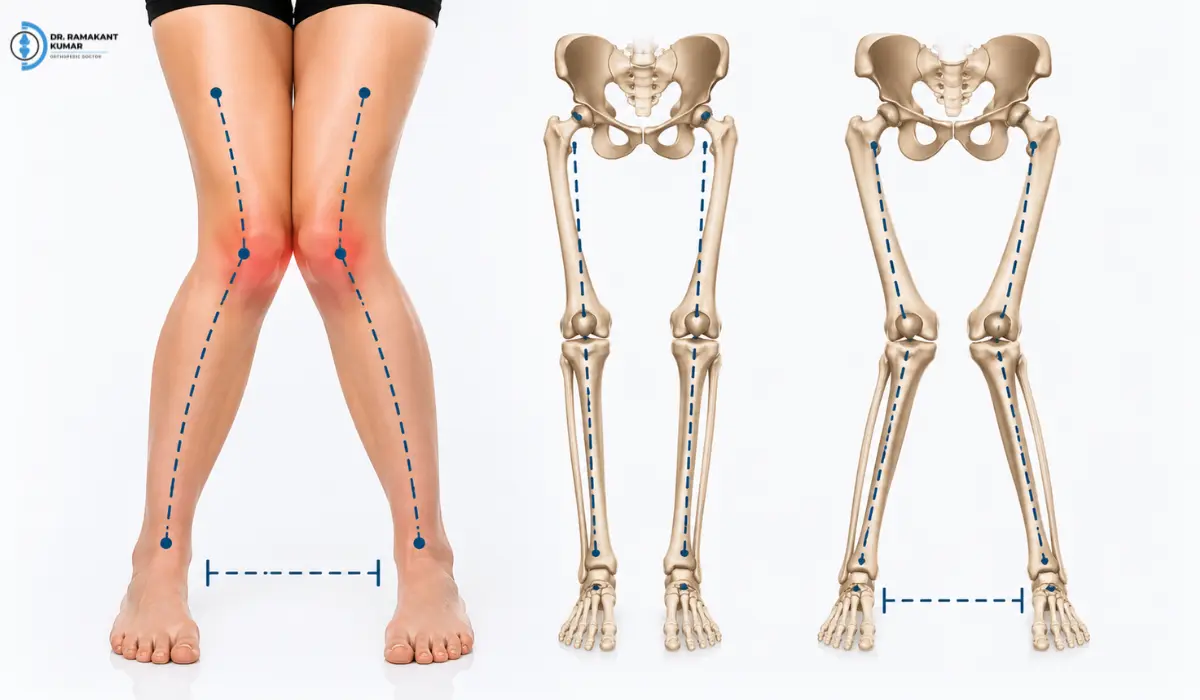
When standing upright, do your knees come together while your ankles stay separated? Do you feel your legs are bending inward while walking, climbing stairs, or standing for a long time? This condition is commonly known as knock knees, and medically, we call it genu valgum.
In children, knock knees may be part of normal growth. But knock knees in adults should not be ignored, especially when it causes knee pain, walking difficulty, joint imbalance, or visible leg deformity. In adults, this condition may be linked with bone alignment problems, arthritis, old injury, obesity, vitamin deficiency, or uneven pressure across the knee joint.
As an orthopedic doctor, I always tell patients one thing clearly: knock knees are not just a cosmetic concern. If the alignment continues to worsen, it can put abnormal stress on the knee joint and may increase the risk of early arthritis or long-term mobility problems. The good part is that with proper diagnosis, knock knees treatment in Patna can be planned based on the exact cause, severity, age, pain level, and joint condition.
What Are Knock Knees?
Knock knees mean the knees angle inward and come close together when a person stands with both legs straight. In many patients, the knees touch each other, but there is a visible gap between the ankles. This inward bending changes the normal mechanical line of the leg.
In a healthy leg, body weight passes from the hip through the center of the knee and down to the ankle. In knock knees, this weight-bearing line shifts abnormally. Over time, this can overload one side of the knee joint, especially the outer compartment, and may lead to pain, cartilage wear, instability, and difficulty in walking.
Some adults have mild knock knees without pain. In such cases, regular monitoring, exercises, and lifestyle correction may be enough. But if the deformity is increasing, pain is present, or walking is affected, proper orthopedic evaluation becomes important.
Knock Knees Causes in Adults
The knock knees causes in adults are different from those in children. In adults, the condition usually develops due to structural, joint-related, nutritional, or injury-related reasons.
1. Childhood Knock Knees That Did Not Correct
Some people develop knock knees during childhood, but the alignment does not fully correct with growth. If the deformity remains into adulthood, it may become more noticeable with weight gain, physical activity, or joint wear.
2. Osteoarthritis of the Knee
Arthritis is one of the most important causes of knock knees in adults. When cartilage wears unevenly, the knee may gradually shift inward. If the outer part of the knee joint becomes more affected, valgus alignment can increase. This is why some patients first notice knee pain and later realise that their leg shape has also changed.
3. Previous Fracture or Improper Bone Healing
A fracture around the thigh bone, shin bone, or knee joint can change the alignment of the leg if it does not heal properly. Even a small malalignment after fracture healing may become a bigger problem over time because the knee carries body weight every day.
4. Vitamin D or Calcium Deficiency
Long-term vitamin D deficiency can affect bone strength. In some patients, weak bones may contribute to deformity, pain, and poor alignment. This is more concerning when there is bone softness, repeated pain, or a history of nutritional deficiency.
5. Obesity and Excess Joint Load
Extra body weight does not directly create knock knees in every patient, but it can worsen an existing alignment problem. The more load the knee carries, the faster cartilage and ligaments may suffer, especially when the leg is not already properly.
6. Ligament Injury or Joint Instability
Old ligament injuries, especially around the knee, may disturb joint balance. If the knee remains unstable for a long time, the walking pattern may change, and abnormal pressure can increase.
7. Inflammatory Joint Disease
Conditions such as rheumatoid arthritis can damage the knee joint and surrounding structures. Over time, this may lead to deformity, stiffness, swelling, and walking difficulty.
Knock Knees Symptoms: Signs You Should Not Ignore
The knock knees symptoms may be mild in the beginning, but they often become more noticeable as the deformity progresses or the joint starts wearing out.
Common symptoms include:
- Knees touching each other while standing straight
- Visible gap between the ankles
- Knee pain while walking, climbing stairs, or sitting cross-legged
- Discomfort felt along the inner or outer area of the knee
- Limping or uneven walking pattern
- Tiredness in the legs after standing for a long time
- Uneven shoe wear
- Difficulty running, squatting, or exercising
- Feeling that the knees are unstable
- Increasing deformity with age
Some patients also complain that one knee looks more bent than the other. This is important because one-sided knock knee deformity may be linked with old injury, arthritis, or uneven bone development.
You should not wait until walking becomes difficult. Early evaluation helps us understand whether the problem is mild, progressive, or already affecting the joint surface.
How Knock Knees Affect Daily Life
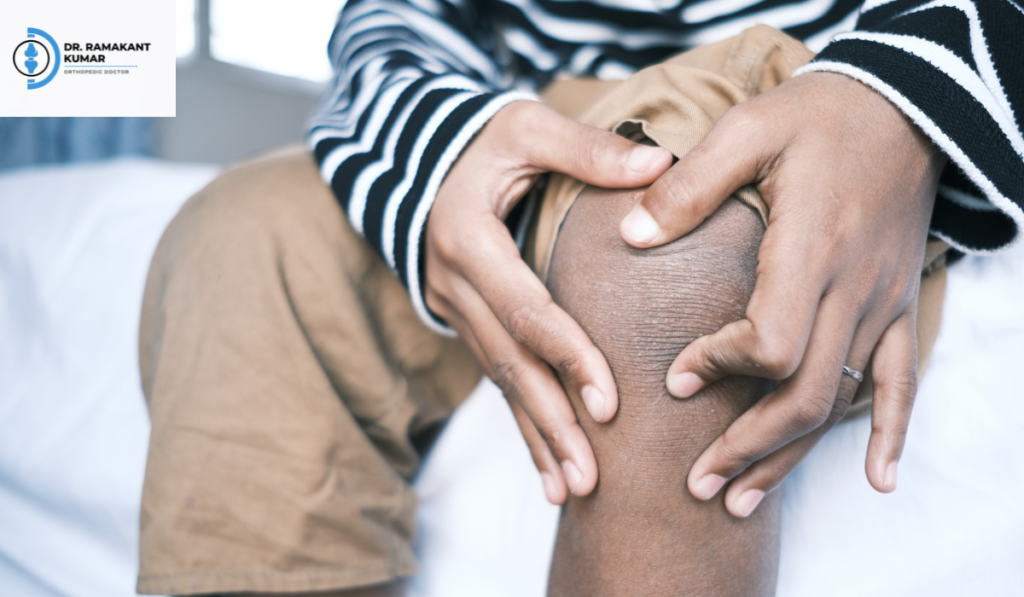
In adults, knock knees can slowly affect daily activities. At first, you may only feel mild discomfort after walking. Later, you may notice pain while climbing stairs, getting up from a chair, standing in the kitchen, walking in the market, or doing office work that needs long standing.
Because the knees angle inward, the body tries to adjust its balance. This can disturb the walking pattern and may put extra pressure on the hips, ankles, lower back, and feet. Many patients also develop uneven shoe wear because the feet compensate for the knee alignment.
The biggest concern is long-term joint damage. When body weight does not pass through the knee evenly, one part of the joint bears more pressure than it should. Over months and years, this may contribute to cartilage damage and arthritis progression.
This is why timely diagnosis and the right treatment plan are important. In the next part, we will discuss how knock knees are diagnosed and what tests are needed before choosing the best treatments for knock knees in adults.
How Knock Knees Are Diagnosed
Before starting knock knees treatment in Patna, the most important step is finding the exact reason behind the deformity. Two patients may have similar-looking legs, but their treatment may be completely different.
During examination, we usually check:
- How much the knees turn inward
- Whether one leg or both legs are affected
- Walking pattern and balance
- Knee movement and stiffness
- Ligament stability
- Pain location inside or outside the knee
- Ankle gap while standing straight
- Signs of arthritis or old injury
A standing X-ray is often very useful because it shows how the body weight is passing through the hip, knee, and ankle. In some cases, a full-length standing leg X-ray may be advised to measure the mechanical axis of the limb. This helps us decide whether the deformity is mild, moderate, or severe.
If there is suspected ligament injury, cartilage damage, or meniscus involvement, MRI may be needed. Blood tests may also be suggested when vitamin D deficiency, calcium deficiency, rheumatoid arthritis, or inflammatory disease is suspected.
The goal is simple: we do not treat only the shape of the leg. We treat the real cause behind the knock knees.
Best Treatments for Knock Knees in Adults
The best treatments for knock knees depend on the patient’s age, pain level, deformity severity, bone quality, arthritis stage, walking difficulty, and daily activity needs. Not every adult with knock knees needs surgery. But not every case can be corrected with exercises either.
1. Observation and Lifestyle Correction
If the deformity is mild and there is no pain, we may begin with observation. Patients are advised to monitor pain, walking changes, and whether the leg alignment is worsening.
Weight control is very important. Even a small reduction in body weight can reduce pressure on the knees. Patients should avoid repeated deep squatting, high-impact jumping, and long standing if these activities increase pain.
2. Physiotherapy and Muscle Strengthening
Physiotherapy can help in mild cases or when symptoms are related to poor muscle control. The aim is not to “magically straighten” adult bones with exercise. The real goal is to improve joint support, reduce pain, improve walking balance, and slow further stress on the knee.
Exercises may focus on:
- Hip abductor strengthening
- Quadriceps strengthening
- Hamstring flexibility
- Core stability
- Gait correction
- Balance training
This is especially useful when the knock knee appearance becomes more noticeable due to weak hip and thigh muscles.
3. Bracing, Shoe Support, and Orthotics
In selected patients, braces or shoe modifications may help reduce pain during walking. Orthotics can support foot position and improve body mechanics, especially if flat feet or ankle imbalance is contributing to knee stress.
However, braces and shoe inserts do not permanently correct bone deformity in adults. They are supportive options, not a complete cure for structural knock knees.
4. Medicines and Joint Care
Pain-relieving medicines may be used for short-term comfort, especially when swelling or arthritis pain is present. But medicines should not be considered the main treatment if the alignment problem is severe.
In arthritis-related knock knees, joint care may include controlled exercise, weight management, supplements when needed, and treatment for inflammation. The treatment should always be planned after proper examination, not only based on painkillers.
5. Corrective Osteotomy
Corrective osteotomy is one of the important surgical options for younger or active adults who have significant knock knees but still have a reasonably preserved knee joint.
In this surgery, the bone is carefully cut and realigned so that body weight passes more normally through the knee. Plates and screws are used to hold the corrected position while the bone heals.
Osteotomy may help:
- Improve leg alignment
- Reduce abnormal joint pressure
- Delay arthritis progression
- Preserve the natural knee joint
- Improve walking mechanics
This option is usually considered when the joint is not completely damaged, and correction can protect the knee for future years.
6. Knee Replacement Surgery
When knock knees are associated with severe arthritis, deformity, stiffness, and daily pain, knee replacement may be the better treatment. In such cases, simply correcting the bone may not be enough because the joint surface itself is already damaged.
During knee replacement, the damaged joint surfaces are replaced, and the leg alignment is corrected. This can help patients walk better, reduce pain, and improve quality of life.
Depending on the condition, treatment may involve total knee replacement or a more specific surgical plan. The decision depends on X-ray findings, cartilage damage, ligament condition, age, and functional needs.
Read More: Plaster Cast Treatment for Bone Fractures in Patna
Knock Knees Treatment in Patna: What Patients Should Expect
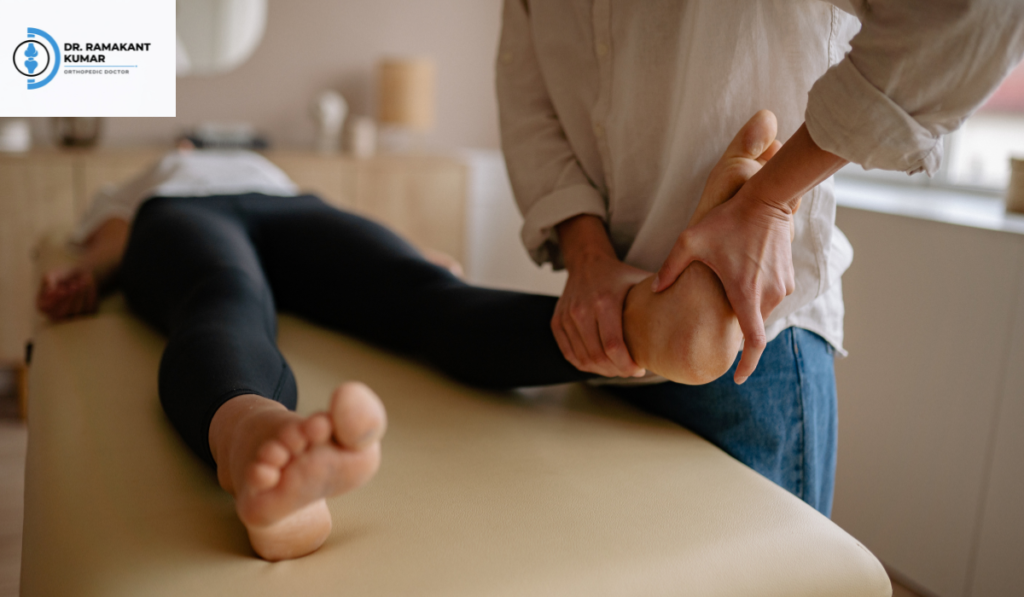
If you are looking for knock knees treatment in Patna, do not choose treatment only by reading symptoms online. A proper clinical examination and standing X-ray are essential before deciding whether you need exercises, support, osteotomy, or knee replacement.
At our orthopedic setup, we focus on identifying the cause first. Some patients need only supervised rehabilitation and monitoring. Some need correction before arthritis becomes severe. Some come late with advanced joint damage and need a more definitive surgical solution.
The right treatment should answer these questions clearly:
- Is the deformity mild, moderate, or severe?
- Is the joint surface still healthy?
- Is arthritis already present?
- Is one leg affected more than the other?
- Is the pain due to alignment, ligament injury, or cartilage damage?
- Will non-surgical treatment actually help in this case?
When these answers are clear, treatment becomes safer, more specific, and more useful for the patient.
Read More: MCL Repair in Patna: Best Doctor, Cost & Recovery Guide
Recovery After Knock Knees Treatment
Recovery depends on the type of treatment chosen. If your knock knees are mild and managed without surgery, improvement usually comes through regular physiotherapy, weight control, posture correction, and activity modification. In such cases, pain and walking comfort may improve gradually over weeks to months.
After corrective osteotomy, recovery is more structured. The bone needs time to heal in the corrected position. Patients usually require walking support in the early phase, followed by guided physiotherapy for knee movement, muscle strength, and walking balance.
If knee replacement is done for severe arthritis with knock knees, early walking usually begins under supervision. Physiotherapy focuses on knee bending, straightening, swelling control, and safe walking. The exact recovery timeline varies from patient to patient, depending on age, bone quality, diabetes control, muscle strength, and how regularly exercises are followed.
Can Knock Knees Be Prevented?
Not every case of knock knees in adults can be prevented, especially when it is related to genetics, childhood deformity, arthritis, or old fracture. But you can reduce the risk of worsening knee alignment by taking care of joint health early.
Maintain a healthy body weight, check vitamin D and calcium levels when advised, avoid ignoring old knee injuries, and treat arthritis symptoms early. If you notice one knee bending inward more than the other, do not delay evaluation. Early diagnosis can help us protect the knee joint before the deformity becomes more painful or difficult to correct.
Read More: Best Superior Labrum Anterior and Posterior (SLAP) Repair in Patna
When Should You See an Orthopedic Doctor?
You should consult an orthopedic doctor in Patna if your knees touch while standing, your ankle gap is increasing, or you have pain while walking, climbing stairs, sitting on the floor, or standing for long hours.
You should also seek medical advice if:
- One leg looks more bent than the other
- Knee pain is increasing month by month
- You feel instability while walking
- Your shoes wear unevenly
- You have a history of fracture, arthritis, or ligament injury
- Your knee deformity is affecting your confidence and daily movement
The earlier we understand the cause, the better we can plan the right treatment.
Read More: Shoulder Arthroscopy Guide: Glenoid, Labrum, Rotator Cuff & AC Joint Repair in Patna
Conclusion
Knock knees in adults should not be ignored, especially when it is painful, progressive, or affecting your walking. In mild situations, it can often be managed with physiotherapy, targeted muscle strengthening, maintaining a healthy weight, and proper joint care But moderate to severe deformity may need advanced treatment such as corrective osteotomy or knee replacement, depending on the condition of the joint.
I always believe that the best treatment starts with the right diagnosis. We should not treat every patient with the same plan. Your age, X-ray findings, pain level, walking pattern, arthritis stage, and future activity all matter.
If you are looking for knock knees treatment in Patna, visit our Advanced Bone & Joint Clinic for a proper orthopedic evaluation. We will examine your leg alignment, review your reports, and guide you toward the safest and most suitable treatment option for your condition.