

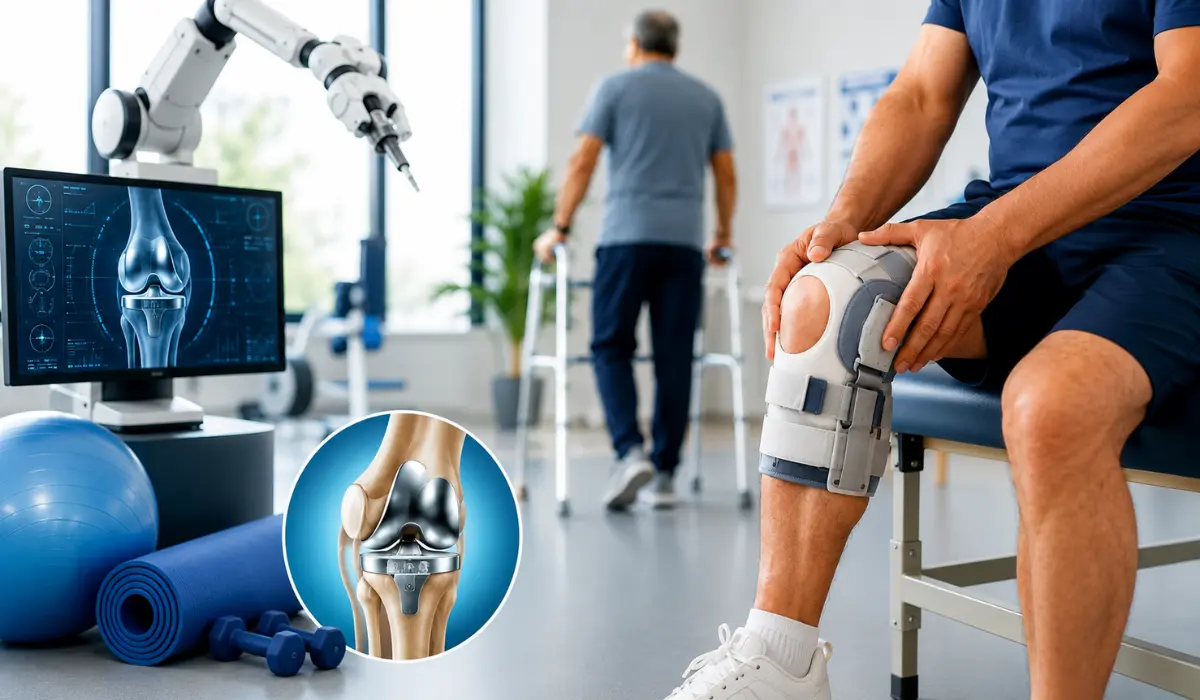
When a patient comes to me for knee replacement advice, the first question is usually not only about the surgery. Most patients ask, “Doctor, how long will it take to walk again?” or “Will I be able to climb stairs after robotic knee replacement?” These are very practical concerns, especially for people who have already spent months or years living with knee pain, stiffness, swelling, bow legs, or difficulty walking even short distances.
Robotic knee replacement has brought a major improvement in how we plan and perform knee replacement surgery. However, it is important to understand one thing clearly. A robot does not perform the operation on its own. The surgery is performed by the orthopaedic surgeon, while robotic technology helps in planning, bone preparation, alignment, and accurate implant positioning.
This accuracy is one of the reasons many patients today go for robotic knee replacement in Patna, especially when they want advanced knee arthritis treatment with better surgical precision. But recovery still depends on many things, including your age, muscle strength, weight, diabetes control, walking habits before surgery, physiotherapy discipline, and how carefully you follow post-surgery instructions.
As an orthopaedic surgeon, I always tell patients that robotic knee replacement recovery is not a one-day process. You may start standing and walking with support quite early, but confident walking, good knee bending, pain reduction, and return to daily activities happen step by step.
Robotic Knee Replacement Recovery Time: What Patients Should Expect
The robotic knee replacement recovery time varies from patient to patient. Some patients walk confidently within a few weeks, while others need more time because of weak muscles, obesity, diabetes, fear of movement, or long-standing deformity before surgery.
In general, recovery should be understood in stages. The first few days are about safe movement and pain control. The first few weeks are about wound healing, swelling reduction, walking with support, and basic knee movement. The next few months are about strength, balance, stamina, stair climbing, and returning to normal daily activities.
First 24 to 48 Hours After Surgery
The first 24 to 48 hours after robotic knee replacement are very important. During this time, the medical team focuses on pain control, blood pressure monitoring, blood clot prevention, wound care, and safe movement.
Many patients are surprised when they are asked to sit, stand, or take a few steps with support soon after surgery. This early walking is not done to put pressure on the patient. It is done to reduce stiffness, improve blood circulation, support lung function, and help the patient regain confidence.
In this phase, you may walk only a short distance with a walker and assistance. That is completely normal. The goal is not distance. The goal is safe standing, proper foot placement, and controlled movement.
You may also be advised to do simple movements like ankle pumps, deep breathing, and gentle leg activation. These small exercises help circulation and reduce the risk of complications. Pain medicines are usually given in a planned way so that you can move without unbearable discomfort.
Some pain, tightness, heaviness, and swelling around the knee are expected in this period. Patients should not panic because surgical tissues need time to settle. However, severe chest pain, breathing difficulty, sudden calf pain, excessive bleeding, or sudden uncontrolled pain should be reported immediately.
Also Read: Knock Knees in Adults: Causes, Symptoms & Best Treatments in Patna
First Week After Robotic Knee Replacement
The first week is usually the adjustment phase. Your body is healing from surgery, and your mind is also learning to trust the new knee. Many patients feel that the knee is tight, swollen, heavy, or difficult to bend. This does not mean the surgery has failed. It usually means the tissues are inflamed and healing.
During the first week, walking is mostly done with a walker. You may need help while getting out of bed, using the toilet, sitting on a chair, or moving around the room. Physiotherapy generally focuses on safe walking, knee straightening, basic knee bending, ankle movement, and muscle activation.
At this stage, patients should avoid two common mistakes. The first mistake is lying in bed all day because of fear. The second mistake is trying to walk too much to prove fast recovery. Both can create problems. Too little movement may increase stiffness, while overactivity may increase swelling and pain.
A balanced approach works best. Short, frequent walking sessions are better than one long, painful walk. Gentle exercises done correctly are better than aggressive bending that causes swelling.
Basic care in the first week usually includes:
- Taking medicines exactly as prescribed
- Keeping the wound clean and dry
- Using ice packs if advised
- Elevating the leg properly
- Walking with support
- Avoiding sudden twisting of the knee
- Following physiotherapy instructions
- Watching for fever, wound discharge, or unusual swelling
Family support is also important during this stage. The patient should be encouraged to move, but not forced beyond comfort. Recovery after robotic knee replacement should feel progressive, not punishing.
Two to Three Weeks After Surgery
By the second and third week, many patients start feeling more confident. Pain usually begins to reduce compared to the first few days, although stiffness and swelling may still remain. Walking distance may improve gradually, and some patients may shift from walker to cane if their surgeon or physiotherapist feels it is safe.
This is also the phase where patients often become impatient. They may ask, “Why am I still feeling tight?” or “Why is my knee still swollen?” The answer is simple. Knee replacement is a major surgery, and healing continues inside even when the wound outside looks better.
During this period, physiotherapy becomes more active. The focus is usually on improving knee bending, achieving better knee straightening, strengthening the thigh muscles, and improving walking patterns. If the patient walks with a limp, the therapist may correct foot placement, step length, and posture.
You should not compare your recovery with another patient. A person who had stronger muscles before surgery may walk faster. A patient with long-standing deformity, obesity, diabetes, or both knees affected may need more time. Recovery is personal.
By the end of three weeks, many patients can manage basic indoor movement more comfortably. However, this does not mean the knee is ready for heavy work, long travel, squatting, sitting cross-legged, or climbing many stairs repeatedly.
Four to Six Weeks After Robotic Knee Replacement
The four to six-week phase is when many patients begin noticing visible improvement in daily activities. Walking becomes smoother. Getting in and out of bed may become easier. Sitting on a chair and standing up may feel more controlled. Pain medicine requirements may be reduced for many patients, although this varies.
This stage is very important for rebuilding strength. The knee implant may be stable, but the muscles around it need training. The quadriceps, hamstrings, hip muscles, and calf muscles all play a role in walking correctly. If these muscles remain weak, the patient may continue to limp even if the surgery was technically good.
Physiotherapy during this phase may include more controlled strengthening, knee bending exercises, walking correction, balance practice, and stair training if allowed. The patient may also start doing more household activities, but heavy lifting, sitting on the floor, sudden turning, and unsupported stair climbing should still be avoided unless cleared by the surgeon.
For many patients, this is the stage where confidence returns. But it is also the stage where carelessness can delay recovery. If you suddenly increase walking distance, attend long functions, travel too much, or skip exercises, swelling can return. Recovery needs discipline even when you start feeling better.
Six Weeks to Three Months After Surgery
Between six weeks and three months, most patients show major functional improvement. Walking stamina improves, pain becomes more manageable, and knee movement becomes more natural. Many patients can do routine activities with more independence.
This is also the period where patients start asking about driving, office work, stairs, and outdoor walking. The answer depends on the operated side, pain control, balance, reflexes, medication use, and overall strength. A patient should never start driving only because a certain number of weeks have passed. Driving should begin only after medical clearance.
By three months, many patients can walk better than before surgery, especially if they had severe arthritis pain earlier. However, mild swelling, warmth, tightness, or stiffness after activity can still happen. This is usually manageable with proper rest, icing if advised, and activity control.
At this stage, the goal is not only to walk. The goal is to walk correctly, safely, and confidently. A good recovery means the patient can perform daily activities with less pain, better stability, and reduced fear of movement.
In my experience, patients who follow physiotherapy regularly, maintain a positive attitude, control diabetes, eat protein-rich food, and avoid unnecessary overactivity usually recover more smoothly.
Three Months to One Year: Full Recovery Takes Time
Many patients feel much better by three months, but full recovery after robotic knee replacement can continue for several months. Swelling may reduce slowly. Muscle strength keeps improving. Walking confidence becomes better. The knee may feel more natural with time.
- Patients may feel occasional stiffness after sitting for long periods.
- Some may feel mild swelling after long walking.
- Some may still need strengthening exercises.
This does not always mean something is wrong. It often means the knee is still adapting.
By six months, most patients are much more comfortable in daily life. In one year, many patients reach their best level of recovery. However, the final outcome depends on the quality of surgery, implant positioning, rehabilitation, patient health, and long-term care.
Robotic knee replacement gives us the advantage of better planning and precision, but your recovery is a partnership. The surgeon performs the operation, the physiotherapist guides your movement, and you play the biggest role in daily discipline.
When Can You Walk After Robotic Knee Replacement?

Walking is one of the biggest concerns after robotic knee replacement. Many patients imagine that they will stay in bed for weeks, but that is not how modern knee replacement recovery usually works. In most suitable patients, walking starts quite early with support, often within the hospital recovery period, depending on pain control, blood pressure, muscle response, and overall health.
In the first few days, walking is done with a walker and supervision. The purpose is not to cover a long distance. The purpose is to teach the body how to stand safely, place weight correctly, and move the operated leg without fear. Some patients take small steps slowly. Some need more assistance. Both situations can be normal.
The first rule is this: do not rush walking, but do not avoid it either. Too much bed rest can increase stiffness, weakness, swelling, and fear. On the other hand, walking too much in the first week can irritate the tissues and increase pain. A balanced walking routine works best.
In the first week, I usually want patients to walk short distances inside the room or house several times a day, as advised by the physiotherapist. The steps should be slow, controlled, and supported. The patient should avoid sudden turns because twisting the knee during early healing can cause unnecessary pain.
By the second or third week, many patients become more comfortable with indoor walking. Some may continue with a walker, while others may move to a stick or cane if their balance and thigh strength are good. This decision should not be taken only by the patient or family. It should be guided by the surgeon or physiotherapist.
By four to six weeks, walking usually becomes smoother for many patients. The limp may reduce, confidence improves, and the patient can often walk longer distances with less fear. Still, it is important to focus on walking quality. A slow, straight, balanced walk is better than fast walking with a limp.
A practical walking progression may look like this:
- First few days: standing and short steps with walker support
- Week 1: short indoor walks, several times a day
- Week 2 to 3: better indoor walking and possible cane use if advised
- Week 4 to 6: improved walking confidence and reduced support in suitable patients
- After 6 weeks: better stamina, smoother walking, and more daily independence
This timeline is only a general guide. A 55-year-old active patient with good muscle strength may recover faster than a 75-year-old patient with diabetes, obesity, or severe deformity before surgery. That is why robotic knee replacement recovery time should always be understood as a patient-specific journey.
You May Like: Vitamin D Deficiency Explained: Symptoms, Causes, Foods & Treatment Options That Work
Pain After Robotic Knee Replacement: What Is Normal?
Pain after robotic knee replacement is expected, especially in the early recovery phase. Even though robotic technology improves surgical precision, the body still goes through a major healing process. Bone surfaces are prepared, soft tissues are handled, and the knee joint needs time to adjust to the implant.
Most patients feel pain, heaviness, tightness, swelling, and warmth around the knee during the first few days. Some patients feel more discomfort during knee bending exercises. This does not automatically mean something is wrong. In fact, mild to moderate pain during early physiotherapy is common because the knee is stiff and the muscles are weak.
However, the important thing is that the pain should gradually reduce. It may not disappear in a straight line every day, but week by week, the patient should feel better control. You may have a good day followed by a stiff day, especially after extra walking or poor sleep. That can happen. But if pain keeps increasing instead of improving, it should be evaluated.
Patients often ask, “Is robotic knee replacement less painful than traditional knee replacement?” The answer should be understood carefully. Robotic assistance can help with accurate planning, alignment, and implant placement. In some patients, better precision may support smoother movement and more confidence during recovery. But it does not mean there will be zero pain after surgery.
Pain control is a part of recovery. It helps you sleep, walk, breathe properly, and do physiotherapy. If pain is not controlled, the patient may avoid movement, and that can lead to stiffness. This is why medicines, icing, elevation, and guided exercises are used together.
Normal early symptoms may include:
- Tightness around the operated knee
- Mild warmth near the joint
- Bruising around the thigh, knee, or leg
- Swelling after walking or exercise
- Pain while bending the knee
- Difficulty sleeping comfortably
- Stiffness after sitting for some time
These symptoms usually improve gradually. But patients and families must also know the warning signs.
Read This: Plaster Cast Treatment for Bone Fractures in Patna
Warning Signs You Should Not Ignore
After a robotic knee replacement, some symptoms need immediate medical attention. Patients should not wait at home if they notice unusual changes. Early action can prevent serious complications.
Contact your orthopaedic surgeon immediately if you notice:
- Fever with chills
- Wound discharge or bad smell from the dressing area
- Increasing redness around the wound
- Sudden severe calf pain
- Sudden chest pain or breathing difficulty
- Severe swelling that appears suddenly
- Pain that becomes worse despite medicines
- Inability to move the ankle or toes properly
- Unusual bleeding from the wound
- Sudden fall or twisting injury after surgery
A little swelling and pain are common, but sudden worsening is not something to ignore. In knee replacement recovery, patient awareness is very important. Families should also observe the patient carefully, especially in the first two weeks after discharge.
Read More: MCL Repair in Patna: Best Doctor, Cost & Recovery Guide
Exercises After Robotic Knee Replacement
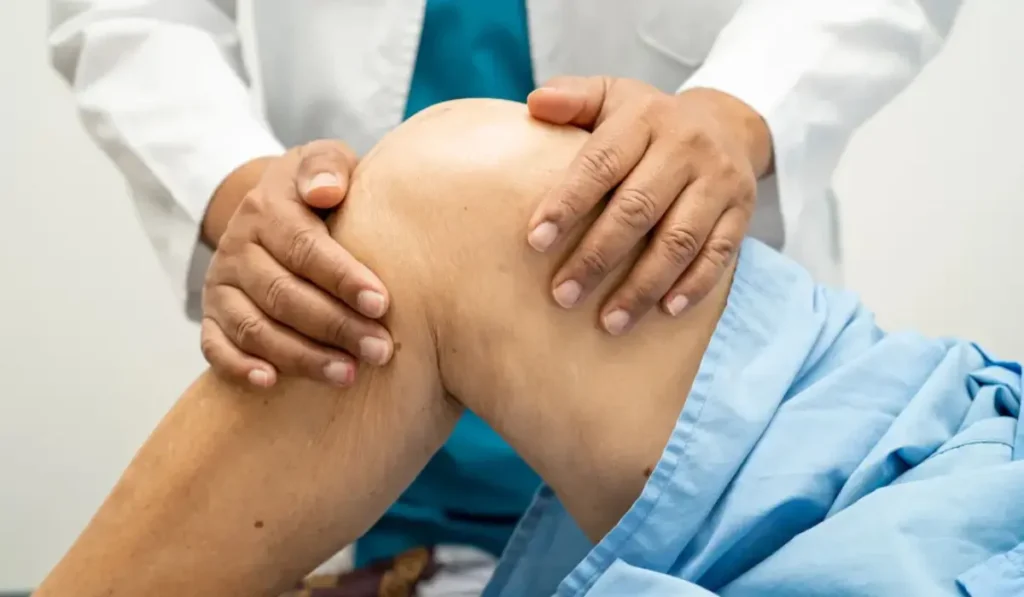
Exercises after robotic knee replacement are not optional. They are one of the most important parts of recovery. Surgery corrects the damaged joint surface, but exercises help restore movement, strength, balance, and walking confidence.
Many patients think that once the implant is placed, the knee will automatically start working normally. That is not true. The thigh muscles may already be weak because the patient avoided walking for months before surgery. After surgery, these muscles need to wake up again.
The first goal of exercise is to reduce stiffness and improve circulation. Later, the focus shifts to knee bending, straightening, muscle strength, balance, and walking pattern. Exercises should always be done as guided by the surgeon or physiotherapist because every patient has a different recovery speed.
Early Exercises Commonly Advised
In the early phase, exercises are usually simple but very important. They may look small, but they help prevent stiffness and improve confidence.
Common early exercises may include:
- Ankle pumps to improve blood flow
- Quadriceps tightening to activate thigh muscles
- Heel slides to improve knee bending
- Knee straightening exercises
- Assisted knee bending while sitting or lying
- Short walking sessions with support
- Sitting and standing practice
- Straight leg raises when allowed
These exercises should not be done aggressively. Painful, forceful bending can increase swelling and fear. The correct method is more important than the number of repetitions.
For example, heel slides should be slow and controlled. Quadriceps tightening should focus on pressing the knee downward and tightening the thigh muscle. Walking should be done with proper posture, not by dragging the operated leg.
Exercises and Movements to Avoid in Early Recovery
Patients should also know what not to do. Some movements can put unnecessary stress on the healing knee.
In the early recovery phase, avoid:
- Squatting
- Sitting cross-legged
- Sitting on the floor
- Running
- Jumping
- Heavy gym workouts
- Sudden twisting
- Kneeling without permission
- Lifting heavy weight
- Using stairs repeatedly for practice without guidance
Many Indian patients are used to floor sitting, low toilets, and squatting activities. After knee replacement, these movements should not be restarted without medical advice. Even if the pain is less, the knee still needs time to gain strength and control.
A good exercise plan should feel challenging but safe. If exercise causes severe swelling, sharp pain, or difficulty walking afterwards, it may be too much for that stage. In that case, the plan should be reviewed.
Why Physiotherapy Matters So Much
Physiotherapy is the bridge between surgery and normal life. Robotic knee replacement may give precise implant placement, but physiotherapy helps the patient use that knee properly.
A physiotherapist teaches how to stand, walk, bend, straighten, climb stairs, sit, and get up safely. Without proper guidance, some patients develop a limp, poor posture, fear of bending, or uneven weight-bearing. These habits can slow recovery.
In my practice, I often see that patients who take physiotherapy seriously recover with better confidence. They do not just move the knee; they learn how to trust the knee again.
Physiotherapy also helps identify problems early. If knee bending is not improving, if swelling is too much, or if the patient is walking incorrectly, the therapist can inform the surgeon and modify the plan.
Recovery tends to improve when patients receive coordinated support from their surgeon, physiotherapist, and family members. Robotic knee replacement recovery is not only about the operation theatre. It continues every day at home through small, disciplined actions.
When Can You Climb Stairs After Robotic Knee Replacement?
Stair climbing is possible after robotic knee replacement, but it should be started carefully and under guidance. Many patients learn basic stair movement during physiotherapy, either before discharge or in the early recovery period. However, climbing stairs normally takes more time because it requires knee bending, thigh strength, balance, and confidence.
In the first few weeks, stairs should not be used as an exercise. They should be used only when necessary and with proper support. If your bedroom, bathroom, or main living space can be arranged on one floor for the first few days, recovery becomes easier and safer.
A simple rule often taught during early stair training is:
- Going up: stronger leg first
- Going down: operated leg first
- Always hold the railing
- Use a cane or stick if advised
- Do not rush while turning on the stairs
This method reduces pressure on the operated knee during early recovery. Once strength improves, your physiotherapist may teach you a more normal stair pattern. But never compare your stair recovery with another patient. A patient with one knee replacement may progress differently from someone who had both knees affected or had severe deformity before surgery.
If stair climbing causes sharp pain, sudden swelling, or fear of falling, do not force it. Tell your surgeon or physiotherapist so that your exercise plan can be adjusted.
Read More: Best Superior Labrum Anterior and Posterior (SLAP) Repair in Patna
When Can You Drive After Robotic Knee Replacement?
Driving after robotic knee replacement depends on more than the number of days after surgery. A patient should be able to sit comfortably, bend the knee enough, move the foot quickly, press the brake safely, and react without delay. If you are still taking strong pain medicines that cause sleepiness, you should not drive.
Right knee surgery usually needs more caution because the right leg is used for braking and acceleration in most vehicles. Left knee surgery may allow earlier driving in some automatic cars, but only after medical clearance. If both knees are painful or have been operated on, driving may take longer.
Before returning to driving, ask yourself:
- Can I sit comfortably in the car?
- Can I bend and straighten the knee without sharp pain?
- Can I move my foot quickly from the accelerator to the brake?
- Am I free from sedating pain medicines?
- Has my surgeon allowed me to drive?
Even if you feel confident, start with a short, familiar route and avoid heavy traffic in the beginning. In a city like Patna, where sudden braking and crowded roads are common, driving should never be restarted casually.
When Can You Return to Work?
Return to work after robotic knee replacement depends on the type of job. A desk-based professional may return earlier than someone who needs to stand all day, climb stairs, travel frequently, or lift weights.
For office work, many patients may start light work after a few weeks if pain is controlled, swelling is manageable, and sitting is comfortable. However, long sitting can make the knees stiff. If you return to office work, you may need short walking breaks, a proper chair height, and enough space to keep the leg comfortable.
For physically demanding jobs, recovery takes longer. Teachers, field workers, shop owners, factory workers, police personnel, and people who travel often may need a more gradual return. Standing for long hours too early can increase swelling and delay comfort.
Work recovery should be planned around your real daily duties, not only your job title. A person with a desk job but long commuting may still need extra time. A person who works from home may return earlier with proper breaks.
What Affects Robotic Knee Replacement Recovery Time?
Robotic knee replacement recovery time is not the same for every patient. Robotic technology helps the surgeon with precision, but recovery depends on the complete health condition of the patient.
One major factor is muscle strength before surgery. Many patients with severe knee arthritis avoid walking for months. Their thigh muscles become weak even before the operation. After surgery, these weak muscles need regular training. This is why some patients walk slowly even when the implant position is good.
Age also matters, but age alone does not decide recovery. I have seen older patients recover well because they follow instructions carefully. I have also seen younger patients delay recovery by overconfidence, skipping physiotherapy, or trying to do too much too soon.
Diabetes control is another important factor. Poor sugar control can affect wound healing and increase infection risk. Patients with diabetes should follow a diet, medicines, and monitoring properly before and after surgery.
Body weight also affects recovery. Extra weight puts more load on the knee joint and can make walking, stair climbing, and exercises harder. Weight reduction before surgery, even a small amount, can help improve comfort and mobility.
Other factors that affect recovery include:
- Severity of knee deformity before surgery
- Bone quality
- Smoking or tobacco use
- Vitamin D and calcium status
- Protein intake
- Sleep quality
- Fear of movement
- Family support at home
- Discipline with physiotherapy
- Timely follow-up visits
The best recovery happens when surgery, physiotherapy, nutrition, medicine, and patient discipline work together. Robotic knee replacement is advanced, but it is not magic. It gives us better surgical control, while recovery depends on daily effort.
Food, Nutrition, and Home Care After Surgery
Many patients focus only on medicines and exercises, but nutrition also plays an important role in recovery. After knee replacement, your body needs protein for tissue healing, iron for blood recovery, and enough fluids to prevent weakness and constipation.
A nutritious Indian meal plan can play an important role in supporting recovery and overall healing. Patients can include dal, paneer, curd, eggs, fish, chicken, soy, sprouts, seasonal vegetables, fruits, and nuts if these suit their health condition. Diabetic patients should follow a sugar-controlled diet. Kidney patients should not increase protein without medical advice.
Hydration is also important. Some patients drink less water because they fear going to the toilet frequently. This can cause constipation, weakness, and urinary issues. Instead, use safe walking support and plan bathroom visits carefully.
At home, small arrangements can prevent falls and make recovery smoother. Use a stable chair with arm support. Avoid sitting on very low beds or sofas. Keep the walking path clear. Remove loose rugs. Use bathroom support if needed. Keep medicines, water, phone, and frequently used items within easy reach.
A safe home setup is especially important in the first few weeks because the patient may still be using a walker or cane.
Robotic Knee Replacement in Patna: When Should You Consult an Orthopedic Specialist?
Patients should not wait until knee pain completely stops their daily life. If you have advanced knee arthritis, repeated swelling, severe pain while walking, deformity, difficulty climbing stairs, or pain even at rest, you should get a proper orthopaedic evaluation.
Not every knee pain patient needs knee replacement. Many patients improve with medicines, physiotherapy, injections, lifestyle changes, and weight management. Surgery is usually considered when joint damage is advanced and conservative treatment no longer gives meaningful relief.
You should consult a specialist if you have:
- Severe knee pain while walking
- Bow-leg or knock-knee deformity
- Difficulty standing from a chair
- Trouble climbing stairs
- Pain that disturbs sleep
- Reduced walking distance
- Repeated swelling
- X-ray showing advanced arthritis
- No relief from medicines or injections
If you are searching for the best orthopaedic doctor in Patna, choose a surgeon who explains all options clearly instead of pushing surgery immediately. A good consultation should include clinical examination, X-ray review, deformity assessment, walking evaluation, medical fitness review, and a clear discussion about expected recovery.
For patients with advanced arthritis, robotic knee replacement in Patna can be considered when pain, deformity, and disability are affecting daily life and other treatments are no longer helping. The decision should be based on your knee condition, not only on age.
Final Recovery Tips for Patients and Families
Recovery after robotic knee replacement becomes easier when the patient and family understand the process before surgery. The first few days require patience. The first few weeks require discipline. The next few months require consistency.
Do not stop exercises just because the pain has reduced. Do not walk too much just because you feel better one day. Do not skip follow-up visits because the wound looks fine. Each stage of recovery has a purpose.
Family members should encourage movement, but they should not force painful activity. They should help the patient walk safely, take medicines on time, attend physiotherapy, and maintain confidence. Emotional support matters because many patients feel fear, frustration, or impatience during recovery.
A few simple habits can protect your results:
- Follow your surgeon’s instructions carefully
- Attend physiotherapy regularly
- Keep diabetes and blood pressure controlled
- Eat enough protein as advised
- Avoid tobacco
- Prevent falls at home
- Do not sit cross-legged unless allowed
- Avoid squatting and floor sitting in early recovery
- Report warning signs early
- Do not compare your recovery with others
Every patient wants a fast recovery, but a safe recovery is more important. A knee that heals steadily gives better long-term confidence.
Related: Best Robotic Knee Replacement in Patna – Total & Partial Knee Surgery Options
Conclusion
Robotic knee replacement can be a very helpful option for patients with advanced knee arthritis, severe pain, deformity, and difficulty walking. The robotic system helps the surgeon with planning and precision, but the final recovery depends on much more than technology.
Most patients begin walking with support early after surgery, but confident walking, pain reduction, knee bending, stair climbing, and return to daily activities improve gradually over weeks and months. Robotic knee replacement recovery time depends on your health, muscle strength, physiotherapy, nutrition, and discipline.
As an orthopaedic surgeon, my advice is simple: do not fear recovery, but respect it. Follow your rehabilitation plan, avoid shortcuts, listen to your body, and stay connected with your doctor. The best results come when accurate surgery is combined with careful aftercare and consistent patient effort.
Want to book an appointment?