

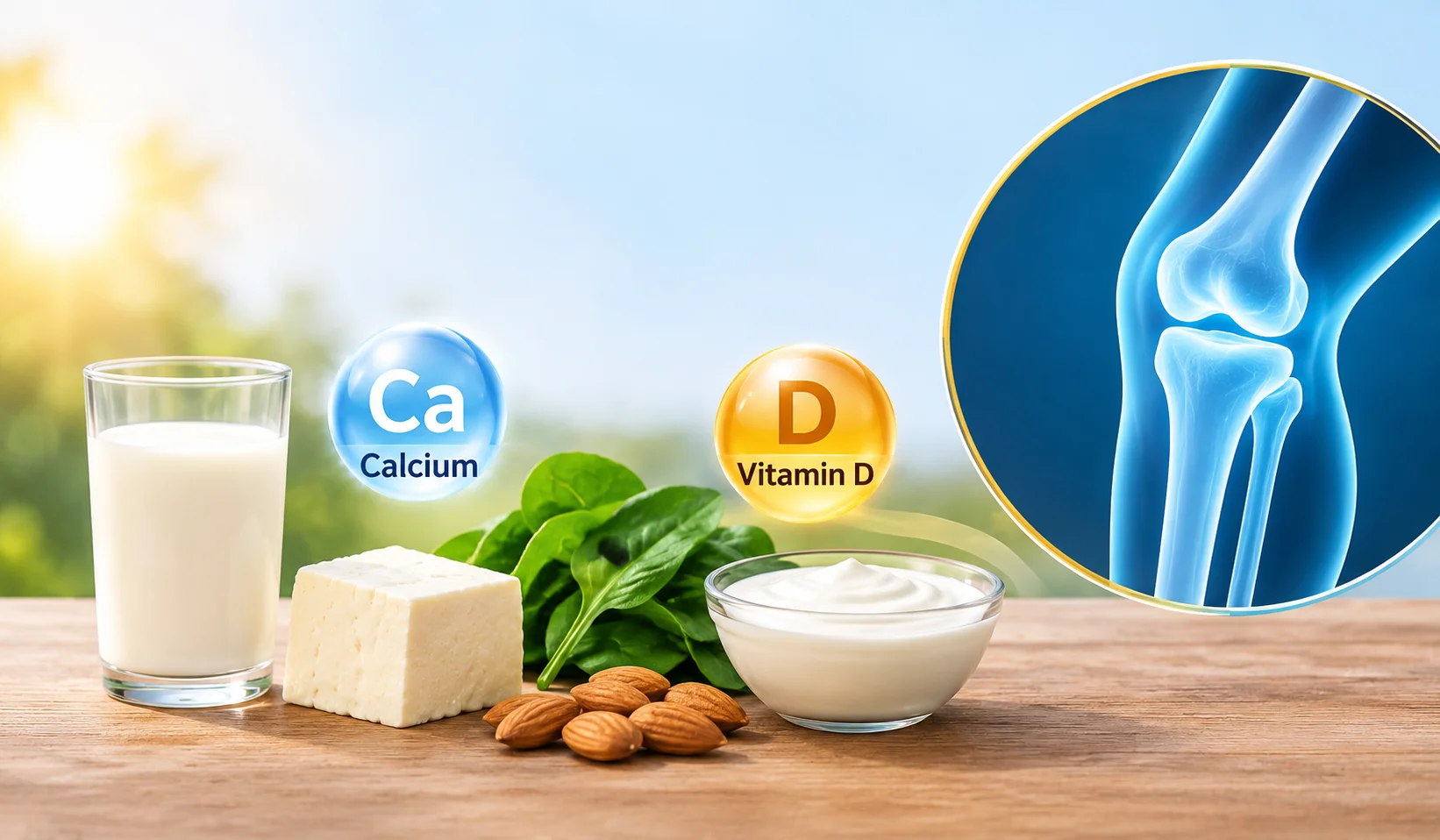
Healthy bones help you stay mobile, maintain balance, and carry out everyday activities with greater ease. But keeping bones healthy is not simply about drinking more milk or taking a calcium tablet. Bone health depends on nutrition, physical activity, age, hormonal changes, body weight, medical conditions and certain medicines.
The good news is that several everyday habits can support healthy bones. A balanced diet with adequate calcium, vitamin D, protein and other nutrients, along with regular physical activity, can help maintain bone health. However, food alone cannot reverse every bone condition, particularly established osteoporosis or significant bone loss.
Can You Make Your Bones Stronger Naturally?
Yes, healthy habits can support bone strength, but there is no single food that can make weak bones strong overnight.
Bone is living tissue that continuously changes throughout life. The body needs adequate nutrients to maintain this process, while physical activity provides an important stimulus for maintaining bone and muscle strength.
Bones rely on calcium to maintain their structure, while vitamin D supports the body’s ability to absorb and use that calcium. Getting enough protein is also important for maintaining healthy bones, muscles, and overall physical function. This makes a balanced approach more useful than relying on one so-called “superfood.”
One important point is often missed: bone or joint pain does not automatically mean calcium or vitamin D deficiency. Arthritis, injuries, muscle problems and other musculoskeletal conditions can also cause pain. If symptoms continue, changing your diet or taking supplements without knowing the cause may not address the actual problem.
Read This: How Long Does a Knee Replacement Last? What Patients Should Know About Implant Longevity
What Nutrients Do Your Bones Need?
Calcium
Calcium plays a vital role in preserving the strength and structural integrity of your bones. When the body does not receive enough calcium over time, it can draw calcium from the skeleton to maintain the calcium level needed for other body functions.
Milk, curd, yogurt, paneer and other dairy foods are convenient sources. People who do not consume dairy can consider suitable fortified foods, calcium-set tofu, certain vegetables and fish with edible bones.
Your calcium requirements can vary based on factors such as your age and sex. For example, adults aged 19–50 generally need about 1,000 mg per day, while women over 50 and men over 70 generally need about 1,200 mg per day according to NIH guidance.
These figures are useful as general nutritional guidance, not as a reason to start supplements on your own.
Vitamin D
Vitamin D enables your body to use calcium effectively while also helping maintain healthy bones and muscles.
Very few foods naturally contain substantial vitamin D. Fatty fish are among the better sources, while egg yolks, some mushrooms and fortified foods can provide smaller or added amounts.
Sunlight can also help the body produce vitamin D, but production varies according to factors such as skin type, age, season, clothing and sun exposure. There is therefore no single “correct” number of minutes in the sun that applies to everyone.
Protein
Protein is another important part of a balanced diet. It supports muscle tissue, and stronger muscles help with movement, physical activity and stability.
Practical sources include dal, beans, eggs, milk and other dairy foods, soy products, fish, chicken and other protein-rich foods according to individual dietary preferences.
The goal is not to follow an unnecessarily high-protein diet. It is to maintain adequate, balanced nutrition.
What Are the Best Foods for Strong Bones?
There is no single “best” food for bone health. Different foods provide different nutrients, so variety matters more than choosing one particular ingredient.
Calcium-Rich Foods for Strong Bones
Useful choices include:
- Milk, curd and yogurt
- Paneer and other dairy foods
- Calcium-fortified foods and beverages
- Calcium-set tofu
- Certain leafy vegetables
- Fish with edible bones, where appropriate
For many Indian families, improving calcium intake does not require an expensive diet. Everyday foods such as curd, milk, paneer, tofu and vegetables can contribute to a balanced bone-health diet.
The important thing is consistency rather than consuming a large amount of one food occasionally.
Also Read: Hip Pain in Children: When Is It Serious and What Treatment Options Are Available?
Which Fruits Are Good for Strong Bones?
Fruits provide vitamins, minerals, fibre and other nutrients that contribute to an overall healthy diet. However, no fruit should be described as a treatment for weak bones.
Oranges, guava, papaya, bananas and other seasonal fruits can all be included in a varied diet. Citrus fruits also provide vitamin C, which the body uses in normal collagen formation.
However, fruits should complement rather than replace calcium-rich foods and appropriate vitamin D sources. A bone-friendly diet is about the overall pattern of eating.
Vitamin D: Which Foods Contain It?
A common question is: “Vitamin D is found in which food?”
Natural food sources are relatively limited. Fatty fish such as salmon, trout, tuna and mackerel are among the better sources. Egg yolks, cheese, beef liver and some mushrooms can provide smaller amounts, while certain foods and beverages may have vitamin D added to them.
Adults aged 19–70 generally need 600 IU (15 mcg) of vitamin D daily, while adults over 70 generally need 800 IU (20 mcg) according to NIH guidance. These are general recommended amounts and should not be interpreted as instructions to take supplements without individual assessment.
You May Like: Robotic vs Traditional Knee Replacement: Key Differences, Benefits, Risks, and Recovery Explained
What Should Women Eat for Strong Bones and Joints?
Women deserve particular attention to bone health as they get older. The decline in estrogen around menopause can accelerate bone loss and increase osteoporosis risk.
There is no separate “magic diet” for women. The focus should be on getting adequate nutrition consistently and staying physically active.
A balanced routine can include:
- Regular calcium-rich foods
- Adequate protein
- Fruits and vegetables
- Appropriate vitamin D sources
- Weight-bearing or resistance exercise
- Avoiding smoking and excessive alcohol
Women with additional risk factors—such as a previous low-impact fracture, early menopause, low body weight or prolonged use of certain medicines—may need individual assessment rather than relying on diet alone.
Do You Need a Vitamin D Supplement?
Experiencing bone or joint pain does not automatically mean that a vitamin D supplement is necessary.
Supplementation may be appropriate when deficiency has been identified, dietary intake is inadequate, or a healthcare professional recommends it based on individual circumstances. Taking excessive amounts is not automatically better and can cause harm.
If you are considering calcium or vitamin D supplements, factors such as your diet, age, medical conditions and other medicines should be considered.
This is particularly important if you have kidney problems, disorders affecting calcium metabolism or other medical conditions that may change your nutritional requirements.
Read This: Robotic Knee Replacement: How Does It Work, Who Needs It and What Can You Expect?
Is Food Enough to Keep Your Bones Strong?
Nutrition is only one part of bone health. Physical activity also matters.
Weight-bearing activities and resistance exercises can help maintain bone and muscle strength, while balance exercises can improve stability and help reduce the risk of falls. Walking, climbing stairs when appropriate, resistance-band exercises and strength training are examples of activities that may support bone health.
Adults are generally advised to aim for at least 150 minutes of moderate-intensity physical activity each week, along with muscle-strengthening activity on at least two days, when their health allows.
If you have osteoporosis, a recent fracture, severe pain or significant physical limitations, exercise should be adapted to your condition and discussed with a healthcare professional before starting a new programme.
What Can Weaken Bones Even If You Eat Well?
A healthy diet does not eliminate every cause of bone loss.
Bone health can also be affected by:
- Increasing age
- Menopause and other hormonal changes
- Physical inactivity
- Smoking
- Heavy alcohol consumption
- Certain long-term medicines
- Some medical conditions
- Previous fractures
- Low body weight
This is why someone can eat a nutritious diet and still develop osteoporosis.
Related Article: Knee Arthroscopy Surgery: When Is Surgery Needed for Knee Pain?
When Should You Get Your Bones Checked?
Osteoporosis is often called a silent disease because it may cause no obvious symptoms until a fracture occurs. A fracture after a relatively minor fall or injury can sometimes indicate that the bones are weaker than expected.
Consider discussing your bone health with a healthcare professional if you have:
- A fracture after a minor fall or relatively small injury
- Repeated fractures
- Significant risk factors for osteoporosis
- Noticeable loss of height or change in posture
- Long-term use of medicines that may affect bone health
- Persistent or unexplained bone or joint symptoms
Depending on your age, symptoms and risk factors, a doctor may consider clinical assessment, blood tests, imaging or a bone-density evaluation.
If you are concerned about persistent bone or joint problems or have experienced an unexplained or low-impact fracture, an orthopedic doctor in Patna can help determine whether further evaluation is appropriate.
Can Diet Reverse Osteoporosis?
A healthy diet is important for maintaining bone health, but it should not be presented as a cure for established osteoporosis.
When bone density is significantly reduced or fracture risk is high, treatment may require more than dietary changes. Depending on the individual situation, management can involve exercise, adequate calcium and vitamin D, lifestyle changes, medicines or monitoring.
The right approach depends on why bone strength has decreased and how significant the risk is.
Read This: Sports Injuries: Warning Signs and When to See a Doctor
A Simple Bone-Healthy Daily Approach
You do not need an expensive diet or complicated meal plan to start supporting your bones.
Try to include a calcium-rich food regularly, eat adequate protein, add fruits and vegetables to your meals, and include appropriate sources of vitamin D. Stay physically active in a way that matches your age and health.
For example, milk or curd can be included with breakfast, dal or another protein source with lunch, fruit as a snack, and vegetables with a protein-rich food at dinner.
Your nutritional needs may be different if you have kidney disease, food intolerance, another medical condition or specific dietary restrictions. In those situations, a personalized plan may be more appropriate than following a general diet chart.
Final Takeaway
Stronger bones are built through consistent habits, not one miracle food. Adequate calcium, vitamin D and protein, a varied diet, regular physical activity and healthy lifestyle choices can all contribute to better long-term bone health.
At the same time, persistent bone or joint pain, a fracture after a minor injury or other osteoporosis risk factors should not automatically be blamed on calcium or vitamin D deficiency. These situations may require proper medical evaluation.
For patients in Patna, an orthopedic evaluation can help determine whether symptoms are related to a bone, joint or other musculoskeletal problem and whether further assessment is needed.